5 min read
8 Ways To Increase Audience Engagement


Share
Have you ever made a post on your blog or business page only to receive a handful of views and comments? Well, you’re not alone. It’s really difficult to increase post reach, engagement, and get followers as a business organically—especially when you’re first getting started. We’ve helped several small to medium-sized businesses with this exact issue. So, in today’s post, we will go over some tips for increasing audience engagement so you can strengthen your digital presence with engaging content.
What Is Audience Engagement?
Audience engagement is the measurement of interactions with your content, whether it’s on your social media accounts, landing pages, blog posts, or website. Growing your following or increasing your visitors is great, but really, the greatest measure of your content’s success is its engagement rate.
Engagement is measured by a number of actions users take on your post, including but not limited to:
- Shares or retweets
- Comments
- Likes
- Audience growth
- Click-throughs
- Landing page visits
- Mentions
Tips To Boost Engagement
1. Create a Conversation
Post content that is helpful by addressing needs and pain points. You want to try to create conversations that show thought leadership rather than just “broadcasting” your brand. If you’re only talking about how great your brand or products are, you’re going to have a difficult time connecting with your audience on a personal level.
Take a look at Domino’s Pizza’s Twitter. One thing Domino’s does is constantly engage in the debate surrounding pineapple on a pizza. Sparking debates in their threads generates a lot of activity.

2. Make Your Posts Visual
With 65% of people being visual learners, and 90% of the information transmitted to our brains being visual, using images, GIFs, and short videos with your posts are a much better way of connecting with your audience.
3. Embrace and Allow Sharing
Repost customer or follower posts, allow guest posting, or consider gaining the attention of influencers through proposing an affiliate partnership. Don’t forget to make your content shareable.
4. Humanize Your Posts
People are more likely to engage with a brand’s post when they know there’s a person behind it rather than some faceless entity. One way you can do this is to send personalized responses to people’s posts or comments. A lot of brands even encourage their social team to personally sign-off on their posts.
- Go beyond retweeting, liking, and commenting to engaging in conversations
- Acknowledge and answer questions
- Respond with humor and warmth
- Show the faces behind the brand
Many brands even engage in banter. Some brands have mastered the art of the comeback, such as Merriam-Webster in the example below. Keep it playful and be careful not to alienate your followers.

5. Use Relevant #Hashtags
Hashtags are a great way to reach new people who aren’t already following you. Many people follow certain hashtags, so if you do your research and use the hashtags, there’s a chance new users will engage with your post and follow your profile.
6. Create Polls, Surveys, and Quizzes
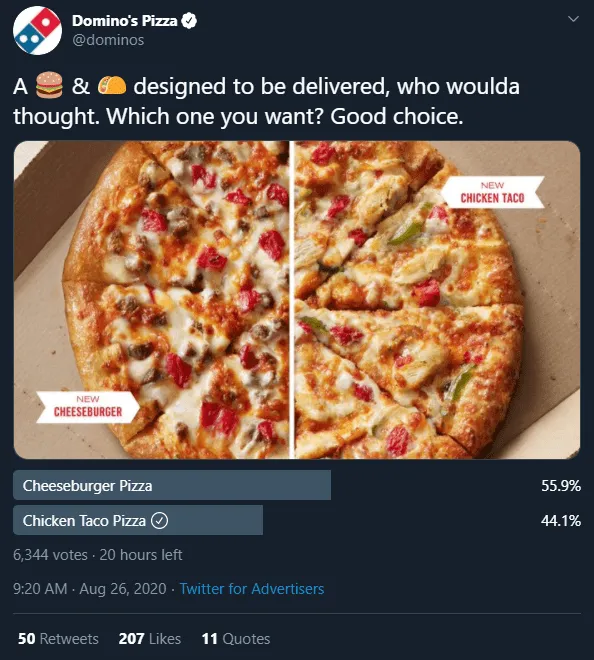
Polls are a simple way to engage followers as it is fun and requires little effort for the user. They are also a great way to get customer feedback. Twitter, Facebook, and Instagram Stories all have poll features that are very easy to use.
7. Run Contests and Giveaways
Contest and giveaways are a great way to get your audience more involved. People love freebies, and contests and giveaways usually require some level of engagement in order to win. Oftentimes they require people to tag a friend or share the post, helping your contest get seen by new users.
8. Post Frequently (at Optimal Times)
Social media moves very fast, meaning once you’ve posted, it will not likely show up on someone’s timeline in a week or even a few days after it’s published due to the staggering amount of social media posts every day. That’s why for many campaigns, posting at least once a day, and even up to 3 times spread throughout the day is acceptable to ensure followers see your content. Do your research to determine the best times to post and schedule out your content in advance.
The Bottom Line
Lack of engagement with content often leads to many small businesses giving up on their efforts. The truth is, content marketing requires a long-term strategy and continuous effort to see positive results. But if you stick with it, the results, in the end, can be tremendous. We hope you are now inspired to strengthen your digital presence with new ideas on how to increase audience engagement!
Need Help?
Feel free to contact us with us if you have any questions.
Related Blogs
Lorem ipsum dolor sit amet, consectetur adipiscing elit, sed do eiusmod tempor incididunt ut labore et dolore magna aliqua. Ut enim ad minim veniam, quis nostru.

9 Call to Action Best Practices
When determining the best marketing strategy for your business, it is essential that you take a close look at your calls to action. The call to action, or CTA, could be considered the most important part of your copy. It is the part that motivates potential customers to take action (buy, sign up, visit a page, etc.) while providing them with the necessary steps for what to do next. For this reason, creating a powerful and memorable CTA for your web copy and sales copy is vital to your company’s overall success. Keep reading to learn more about CTA best practices that will improve your marketing strategy and help you convert leads more effectively.

Landing Pages vs. Websites
The core differences between landing pages and websites can be hard to figure out, especially if you are new to the world of digital marketing. Landing pages and websites play off one another and work together to form a cohesive brand and build trust and interest in your customers and leads. Though there are similarities between landing pages and websites, the two have some important distinctions that boil down to their purpose. Keep reading to learn about some of the differences and similarities between landing pages and websites before you take the plunge and start creating your own (or before your hire someone else to help you)!

What Is Story Marketing & Why Does It Matter?
People generally dislike advertisements. They resent feeling bombarded by ads as they go about their daily lives, and according to survey results reported by HubSpot, 91% of consumers say this intrusive feeling has gotten worse in the past several years. That’s why many experts claim that the future of marketing lies in storytelling. This article will talk about what story marketing is, why it’s predicted to be the next big thing in the digital marketing industry, and what makes it an effective strategy. Along with that, we will provide you with some tips on how you can incorporate storytelling into your own advertising efforts in order to make them more successful. Let’s get started!
Reimagine Your Digital Impact
Transform your website, pitch decks, sales collateral and more, all with transparent, upfront, pricing.