5 min read
AI Doesn't Fix a Confusing Website. It Repeats It, Faster.

Share
A lot of companies are throwing AI at their website right now. Chatbots, generated content, automated follow-ups. All of it sounds good on paper. Almost none of it fixes the actual problem.
AI can't fix unclear website messaging, it amplifies it. A chatbot trained on a fuzzy value prop gives fuzzy answers, just faster. Before adding AI tools to your site, the message itself needs to be clear about what you do, who it's for, and why it matters. Clarity is the foundation AI builds on, not something AI creates.
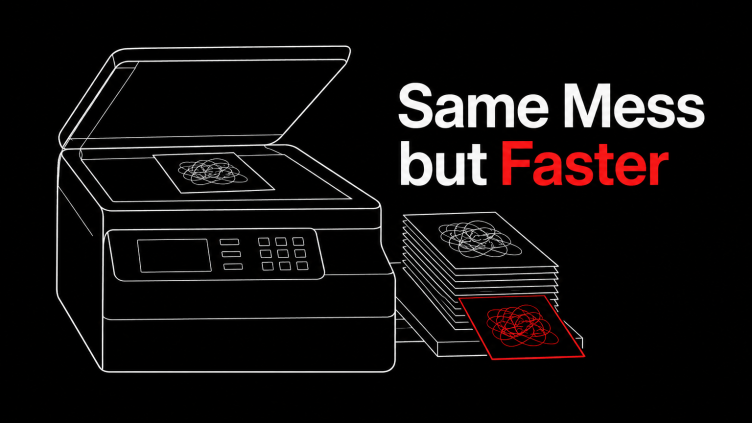
The Confusion Doesn't Go Away, It Just Moves Faster
Here's the thing we keep running into with clients who are excited about AI: if the website itself isn't clear about what you do, who it's for, and why it matters, AI just repeats that confusion at scale.
A chatbot trained on unclear messaging gives unclear answers. It doesn't know what your company actually does any better than the visitor reading your homepage does, because it learned from the same murky copy. Generated content built on a fuzzy value prop still sounds fuzzy. It's just produced faster, and now there's more of it.
This is the part people miss. AI is a multiplier. It takes whatever is already true about your site and makes more of it, more quickly. If what's true is clarity, that's a huge advantage. If what's true is confusion, you now have confusion at scale, with a nicer interface.
The Website Is Still Where the Real Conversation Starts
The website is still the starting point. For most companies, it's the first real conversation someone has with your business, before a sales call, before a demo, before a single human interaction. That's where the clarity has to live before anything else gets layered on top.
This isn't a new idea, but it gets forgotten the moment a new tool shows up. Teams get excited about what AI can automate and skip the harder question: automate what, exactly? If the underlying message is muddy, automating it doesn't make it less muddy. It just means the muddiness shows up in more places, faster, with your name attached.
We see this constantly. A company adds a chatbot to "improve the customer experience," and the chatbot ends up giving the same vague, hedge-everything answers the sales team has been giving for years, because that's what it was trained on. The tool isn't the problem. The source material is.
When the Foundation Is Solid, AI Actually Earns Its Keep
When that foundation is solid, AI tools have something good to work with. Automations sound like you, because the message they're built on already sounds like you. Follow-ups make sense, because they're grounded in a clear understanding of who the customer is and what they actually need next.
This is the difference between AI that sounds bolted-on and AI that feels native to how a company operates. It's not about better prompts or a smarter model. It's about whether the thing being automated was clear to begin with. Get that right, and the site does its job, and everything built around it gets stronger instead of louder.
This also changes the order of operations for most AI rollouts. Instead of starting with "which tool should we buy," the better starting question is "what are we actually trying to say, and is our site saying it clearly right now." That's a messaging audit, not a software purchase, and it's usually the higher-leverage move.
Frequently Asked Questions
Does adding AI to my website improve my messaging automatically? No. AI tools reflect whatever messaging already exists on your site. If that messaging is unclear, AI-generated content and chatbot responses will be unclear too, just produced at higher volume and speed.
Should I fix my website messaging before adding AI tools? Generally, yes. Messaging clarity is the foundation AI automation builds on. Fixing it first means chatbots, generated content, and automated follow-ups all start from something solid instead of amplifying existing confusion.
What does "unclear messaging" actually look like on a website? It's usually a homepage that doesn't clearly say what the company does, who it serves, or why that matters to the visitor. Vague value props, jargon without explanation, and generic language that could apply to any competitor are common signs.
Can AI help identify unclear messaging on my site? It can surface patterns, but the judgment call on what's actually clear versus what sounds clear still needs a person who understands the business and the customer. That's usually a strategy conversation, not a tool you run.
Is this just an argument against using AI on websites? No. It's an argument for sequencing. AI is genuinely useful once the messaging underneath it is solid. The point is that AI doesn't replace the work of getting clear, it just determines how fast that clarity, or that confusion, spreads.
If you're thinking about adding AI into your site or your workflow, it's worth looking at what the site is actually saying first. Reply and let us know where you're at, we're happy to take a look.
Related Blogs
Lorem ipsum dolor sit amet, consectetur adipiscing elit, sed do eiusmod tempor incididunt ut labore et dolore magna aliqua. Ut enim ad minim veniam, quis nostru.
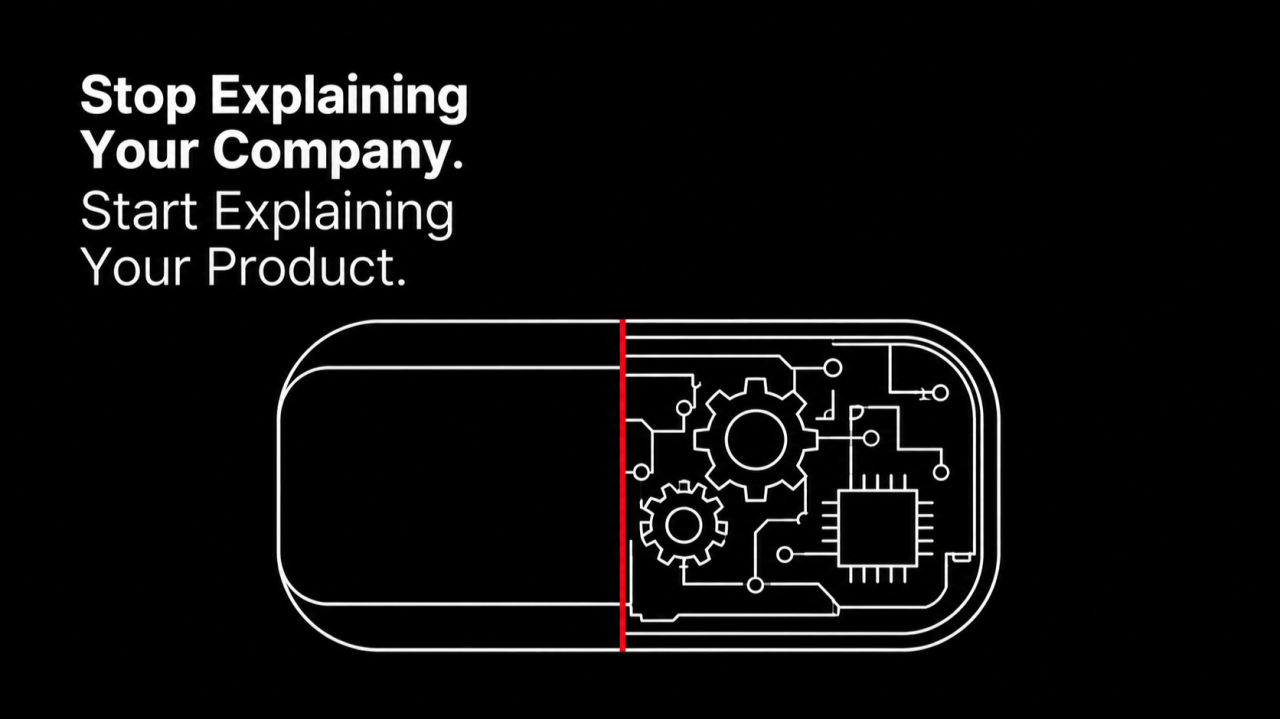
Your Website Talks About Your Company. Does It Explain Your Product?
Most B2B websites are built to answer one question: who are you? Mission, values, team, maybe a client logo wall. What they almost never answer is the question that actually gets deals moving: what do you make, and how does it work?
Reimagine Your Digital Impact
Transform your website, pitch decks, sales collateral and more, all with transparent, upfront, pricing.