5 min read
Beyond Transactions: Mapping Your Customer Journey

Share
Welcome back to our Madak Monday Series, Navigating The Chaos, your guide to reclaiming control of your marketing and achieving your goals.
Throughout this series, we'll share practical resources and templates that help you conquer your marketing chaos.
Today, we’re focusing on an essential element of customer management: a Customer Journey.
What is a Customer Journey Map?
A customer journey map is a visual representation of the process or stages a customer goes through when engaging with and purchasing from your brand. It should outline each stage of the customer experience, from initial awareness to post-purchase behavior, capturing every touchpoint along the way. This map will help you understand your customer’s motivations, needs, and pain points, providing valuable insights into how they interact with your brand.
Why It Matters
The exercise of creating a customer journey map might seem silly but putting yourself in your customer's shoes is crucial. The main goal of the customer journey map is to understand how your customers purchase your product or service. The second goal is to improve or simplify your customer's journey and ensure they would want to purchase again or recommend to others. A customer journey should be easy, quick, and not difficult for customers to find the answers to their questions.
Creating a Customer Journey Map can help you:
Enhance Customer Experience: By understanding the customer’s perspective, you can create more personalized and relevant experiences that cater to their specific needs and preferences.
Increase Engagement: Engaging customers at the right touchpoints with the right messages leads to higher conversion rates and loyalty.
Improve Marketing Strategies: Insight into the customer journey informs more effective marketing strategies and campaigns, ensuring your efforts are aligned with customer expectations.
Reduce Churn: Addressing pain points and providing excellent post-purchase support reduces customer churn and increases retention.
Stronger Brand Loyalty: Satisfied customers are more likely to become brand advocates, driving word-of-mouth referrals and long-term loyalty.
Creating Your Own Map
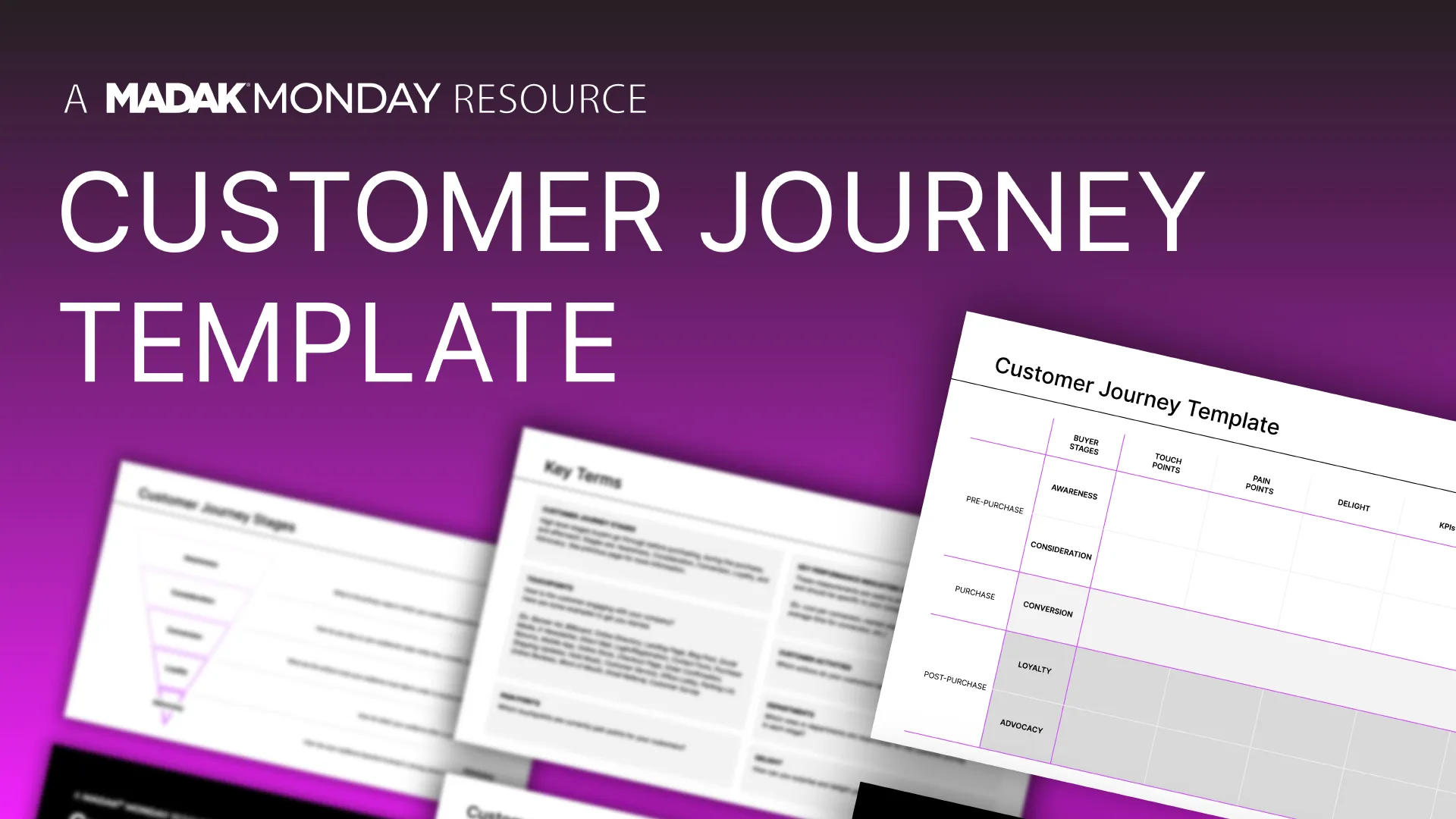
Creating a Customer Journey from scratch can be daunting. That’s why we’ve developed a customizable Customer Journey Template to simplify the process. Our template covers all the essential elements, making it easier for you to develop a comprehensive map that reflects your customer's buying journey.
To get you started, here’s a template for your map:
Get Started
Downloaded the template but still stuck? Or maybe you completed the template but are not sure what to do next? We’re here to help. Send us a message today to chat about your customer journey.
Stay tuned for the next part in our Navigating The Chaos series!
Related Blogs
Lorem ipsum dolor sit amet, consectetur adipiscing elit, sed do eiusmod tempor incididunt ut labore et dolore magna aliqua. Ut enim ad minim veniam, quis nostru.
9 Call to Action Best Practices
When determining the best marketing strategy for your business, it is essential that you take a close look at your calls to action. The call to action, or CTA, could be considered the most important part of your copy. It is the part that motivates potential customers to take action (buy, sign up, visit a page, etc.) while providing them with the necessary steps for what to do next. For this reason, creating a powerful and memorable CTA for your web copy and sales copy is vital to your company’s overall success. Keep reading to learn more about CTA best practices that will improve your marketing strategy and help you convert leads more effectively.

Landing Pages vs. Websites
The core differences between landing pages and websites can be hard to figure out, especially if you are new to the world of digital marketing. Landing pages and websites play off one another and work together to form a cohesive brand and build trust and interest in your customers and leads. Though there are similarities between landing pages and websites, the two have some important distinctions that boil down to their purpose. Keep reading to learn about some of the differences and similarities between landing pages and websites before you take the plunge and start creating your own (or before your hire someone else to help you)!

What Is Story Marketing & Why Does It Matter?
People generally dislike advertisements. They resent feeling bombarded by ads as they go about their daily lives, and according to survey results reported by HubSpot, 91% of consumers say this intrusive feeling has gotten worse in the past several years. That’s why many experts claim that the future of marketing lies in storytelling. This article will talk about what story marketing is, why it’s predicted to be the next big thing in the digital marketing industry, and what makes it an effective strategy. Along with that, we will provide you with some tips on how you can incorporate storytelling into your own advertising efforts in order to make them more successful. Let’s get started!
Reimagine Your Digital Impact
Transform your website, pitch decks, sales collateral and more, all with transparent, upfront, pricing.