5 min read
Copywriting Tips

Share
Good copy is like the last open outlet at the airport gate. It’s priceless. Even if you aren’t a trained copywriting pro, there are some simple but effective ways you can spice up your copy and grab potential customers’ attention. Here are a few helpful tips.
Speak Their Language
Whenever you’re trying to sell something or encourage a certain action, it’s important to know your audience. For strong copywriting, however, it’s also important for you to address them. How can you speak your customers’ language? This might look like working in typical jargon or idioms from your target demographic, or simply gauging whether a casual, conversational tone is preferable to a more formal one.
Use the Second Person
The #1 tip for addressing your audience is also a simple one: the second person is your friend! Use “you” as much as possible to involve your audience directly. “You” is much more engaging compared to “we”, “I”, or your brand name, which are words that make the conversation feel like it’s all about you, the company, and not about your customer.
Appeal To Emotions
Think of copywriting like delivering a speech: you want the audience to be moved by your words, not dozing off. Assess your ideal customers’ wants, needs, desires, and fears to write vivid copy that appeals to their emotions, whether it’s their FOMO, their desire to spend more time with family, or just general happiness and enjoyment. That’s why the classic McDonald’s tagline is “I’m lovin’ it”—not the bland “Eat at McDonald’s.”

Show the Proof
Emotional appeals are important, but some customers may take a little more convincing. Consider highlighting a few well-chosen statistics to prove that your product or service has been successful. Alternatively, if the “just the facts” approach seems too formal for your brand voice, you can build credibility more subtly by referring to testimonials, case studies, success stories, and more.
Tell a Good Story
Everyone loves a good story. Telling a narrative with your copy helps customers imagine themselves as the main character—they’re now the first-time hiker looking for the perfect novice hiking shoes, or the tired parents seeking a pick-me-up coffee brand. Stories are also incredibly memorable, and you’ll find they stick in customers’ minds long after the other details of your copy have faded. For more inspiration, check out this Forbes article on the art of good storytelling.
Less Is More
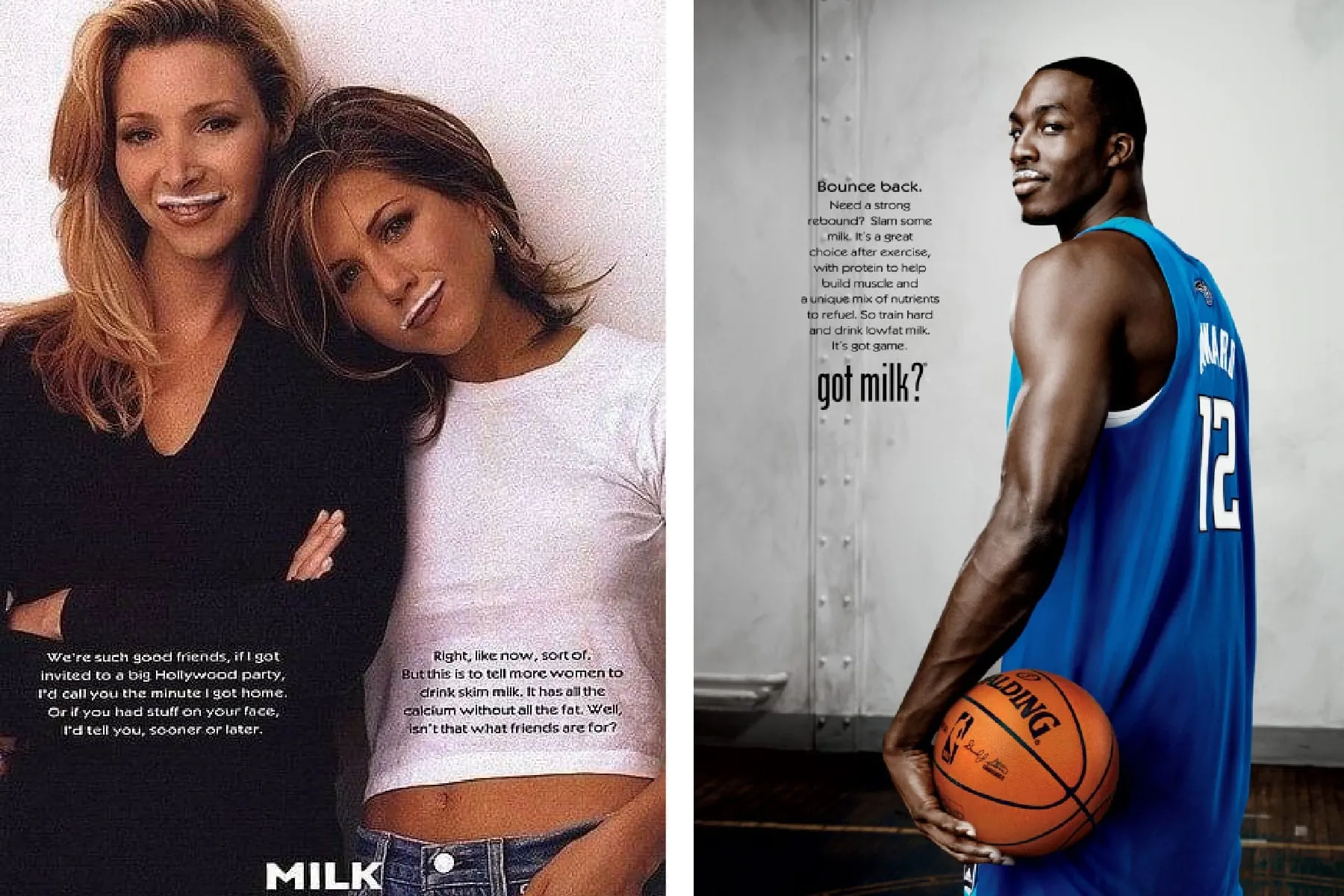
Got Milk? Even if you don’t remember the milk company that first started this ad, you saw these two iconic words everywhere between 1993 and 2014, part of a campaign so successful it was resurrected in 2020. Copywriting isn’t essay writing. Concise, pithy sentences and fluff-free catchphrases are the way to go to grab customers’ short attention spans. Bonus tip: try using an app like Hemingway to declutter your prose.
Address Their Fears
Are you scared of mentioning any detractions or potential flaws when you write copy? You shouldn’t be! Anticipate customer fears or worries before they even raise them. Although it seems counterintuitive, it makes customers feel that you’re more trustworthy, since you’re acknowledging their concerns rather than trying to hide something. For example, you could address a common customer service concern with “Don’t worry; when you call us, a real person will be on the line!”
Choose Powerful Words
Changing a single word can make a world of difference. For example, you may have seen lists of the most persuasive words in copywriting—simple words like because, free, and instantly. Replacing adjectives and adverbs with punchy, powerful verbs is also an excellent way to jazz up your copy (like replacing the word “improve” with “jazz up”!). Verbs are direct, specific, and memorable.
Bonus tip: banish the weasels. Weasel words like almost, sort of, maybe, probably, and likely all weaken your statements without adding anything useful. If you mean what you say, you don’t need to “almost” or “possibly” mean it.
Be Visually Appealing
Words matter, but so does the way they’re arranged. Most customers’ eyes glaze over if they have to navigate large blocks of text on the page, especially when reading online. Short sentences grouped into short paragraphs—no more than 3-4 lines—encourage readers to keep their eyes moving down the page. Use bullet points and lists, bold text and italics, and color and highlighting for emphasis and ease of reading.
Don’t forget to make your copy look stellar on mobile, too.
The Bottom Line
You don’t have to be a copywriter with 20 years’ professional experience to spruce up your copy. Inject a little of your personality into your prose, keep it short and snappy, and think about the story you’re trying to tell. Use these tips for copywriting that will keep customers coming back for more!
Need Help?
Feel free to contact us if you have any questions.
Related Blogs
Lorem ipsum dolor sit amet, consectetur adipiscing elit, sed do eiusmod tempor incididunt ut labore et dolore magna aliqua. Ut enim ad minim veniam, quis nostru.
9 Call to Action Best Practices
When determining the best marketing strategy for your business, it is essential that you take a close look at your calls to action. The call to action, or CTA, could be considered the most important part of your copy. It is the part that motivates potential customers to take action (buy, sign up, visit a page, etc.) while providing them with the necessary steps for what to do next. For this reason, creating a powerful and memorable CTA for your web copy and sales copy is vital to your company’s overall success. Keep reading to learn more about CTA best practices that will improve your marketing strategy and help you convert leads more effectively.

Landing Pages vs. Websites
The core differences between landing pages and websites can be hard to figure out, especially if you are new to the world of digital marketing. Landing pages and websites play off one another and work together to form a cohesive brand and build trust and interest in your customers and leads. Though there are similarities between landing pages and websites, the two have some important distinctions that boil down to their purpose. Keep reading to learn about some of the differences and similarities between landing pages and websites before you take the plunge and start creating your own (or before your hire someone else to help you)!

What Is Story Marketing & Why Does It Matter?
People generally dislike advertisements. They resent feeling bombarded by ads as they go about their daily lives, and according to survey results reported by HubSpot, 91% of consumers say this intrusive feeling has gotten worse in the past several years. That’s why many experts claim that the future of marketing lies in storytelling. This article will talk about what story marketing is, why it’s predicted to be the next big thing in the digital marketing industry, and what makes it an effective strategy. Along with that, we will provide you with some tips on how you can incorporate storytelling into your own advertising efforts in order to make them more successful. Let’s get started!
Reimagine Your Digital Impact
Transform your website, pitch decks, sales collateral and more, all with transparent, upfront, pricing.