5 min read
Inbound vs. Outbound Marketing

Share
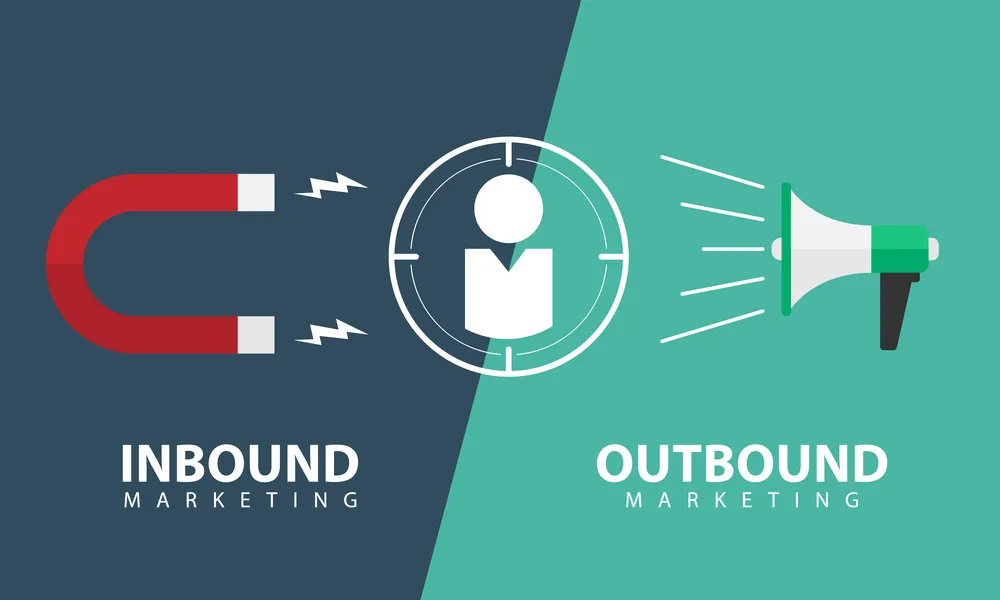
Marketing strategies are constantly evolving and improving, and it’s essential to stay up to date. Two well-known strategies include outbound marketing and inbound marketing. These ‘strategies’ may be thought of as ‘concepts’, as they are overarching approaches to marketing as opposed to a specific tool or process.
Both outbound and inbound marketing come with their own tools and tactics. Keep reading to learn about the differences between these strategies and familiarize yourself with the benefits of both!
Inbound Marketing

Inbound marketing often involves making yourself appealing and noticeable, causing your preferred audience to come directly to you. Instead of putting your message out there and hoping that a few people will be interested, inbound marketing helps you get found by people that already have an interest. This allows people to take their buying experience into their own hands. According to HubSpot, the goal of inbound marketing is to attract, engage, and delight people into making a purchase.
This marketing concept relies on spreading brand awareness and capitalizes on the idea that people who search for something in your industry will find you organically if you increase your business’s visibility with inbound marketing tactics.
Inbound Marketing Tactics
Since inbound marketing takes advantage of the power of SEO (search engine optimization), online interactions, and internet-related value, content creation is usually a huge part of this strategy. Inbound marketing generally involves the use of social media, blog posts, value-based email newsletters, downloadable PDFs and Ebooks, and other searchable and lead-generating content.
Outbound Marketing

Outbound marketing is commonly thought of as a more traditional style of marketing, as it involves putting your message out to a large group of consumers. An appropriate analogy would be asking every person you see on the street if they want to buy your product一you are exposing your message to a wide audience, though you don’t necessarily know what their level of interest is.
Outbound Marketing Tactics
Usually, outbound marketing demands action-oriented tactics. Since this kind of marketing involves reaching out to the audience as opposed to letting them find you, some common tactics are cold calling, telemarketing, large-scale advertising, direct mail (snail mail), television and radio ads, trade shows, seminars, door-to-door sales, and more.
The Benefits of Using Both Strategies
Inbound marketing has increased in popularity over the last decade, and many people now think of outbound marketing as old news. While inbound marketing is invaluable in today’s social, cultural, and business environment, outbound marketing still has its advantages
Why Use Inbound Marketing?
Just like outbound marketing, the goal of inbound marketing is to engage an audience. The difference is that the audience comes to find you. This provides you with qualified leads that you already have a relationship with and that are already on their customer journey.
As stated above, the results that come from inbound marketing may not be as immediate. Building your content and increasing your brand awareness will take time and patience, but this strategy is likely to be less expensive and more successful in the end. In fact, it has been reported that if done correctly, inbound marketing can be up to 10 times more effective at converting a lead than outbound marketing.
Why Use Outbound Marketing?
It has been reported that the cost of an outbound marketing lead is $332 in comparison to $134 for an inbound lead. This monetary estimation may immediately seem like a deterrent, but one thing outbound marketing excels at is getting fast results. With the higher price comes a higher chance that someone will become a lead since people are sure to see and interact with your marketing.
Additionally, outbound marketing is useful when used as an aid to inbound marketing. If you have great content that will influence leads to look more into your brand, you can use outbound marketing to push people towards those materials. In other words, if you have inbound marketing materials that don’t have a lot of organic traffic yet, you can use outbound marketing to promote them.
The Bottom Line...
Both outbound and inbound marketing should have their time to shine, and finding the perfect balance between them will require trial and error.
Related Blogs
Lorem ipsum dolor sit amet, consectetur adipiscing elit, sed do eiusmod tempor incididunt ut labore et dolore magna aliqua. Ut enim ad minim veniam, quis nostru.
Step-by-Step Guide to Building Email Automation with HubSpot
Email automation is a great option for businesses that want to save time and energy in their marketing efforts without sacrificing reach and engagement. Automating emails allows you to be more organized, efficient, and effective as you communicate with supporters and accomplish business goals. Keep reading to learn more about the benefits of HubSpot’s Email Automation Software and to get a step-by-step guide for implementing this software in your strategy.
.webp)
Why Your Company Needs Brand Messaging
With so many companies launching every day and trying to get the attention of customers, standing out can be difficult. To some entrepreneurs, it may seem like an impossible mission. However, even though it requires a lot of dedicated work, brand messaging is one thing that any company needs in order to become recognizable and stand out to its target customers. Having said that, many companies neglect to put effort into brand messaging, opting to focus on their visuals, website design, and social media presence. While these things are important, brand messaging is just as important to crafting a company image. Here is why.
.webp)
Creative Possibilities in Webflow from a Art Director’s Perspective
Since websites are an important part of any business’s brand strategy it’s important that your website makes a good impression and is well-designed. Your website is often the first place people go to learn more about your brand and purchase products and services. However, it’s been found that users make a first impression of a website in only 50 milliseconds, meaning that you only have a short time to prove that your brand stands out from competitors.Luckily, platforms like Webflow offer creative elements that can be easily implemented to build an advanced and visually engaging website.
Reimagine Your Digital Impact
Transform your website, pitch decks, sales collateral and more, all with transparent, upfront, pricing.