5 min read
Sitemaps And Wireframes


Share
When it comes to web development, it can feel like there’s a lot of terminology to learn. For example, do you know the difference between sitemaps and wireframes? If you don’t, never fear: we’ll take you through both of these tools and why they’re so important for developing a website.
What Is a Sitemap
Think of a sitemap as a website blueprint: a diagram or flowchart that depicts the hierarchy of each website component and the paths between them. For example, a vertical sitemap might start with “Home” at the very top, then branch out into a lower tier of pages like About, Services, Contact Us, Pricing, and more. Each of these page categories will then break down further—an “About” page might split into separate sub-pages like Our Staff, Our History, Careers, and so on.
What Is a Wireframe
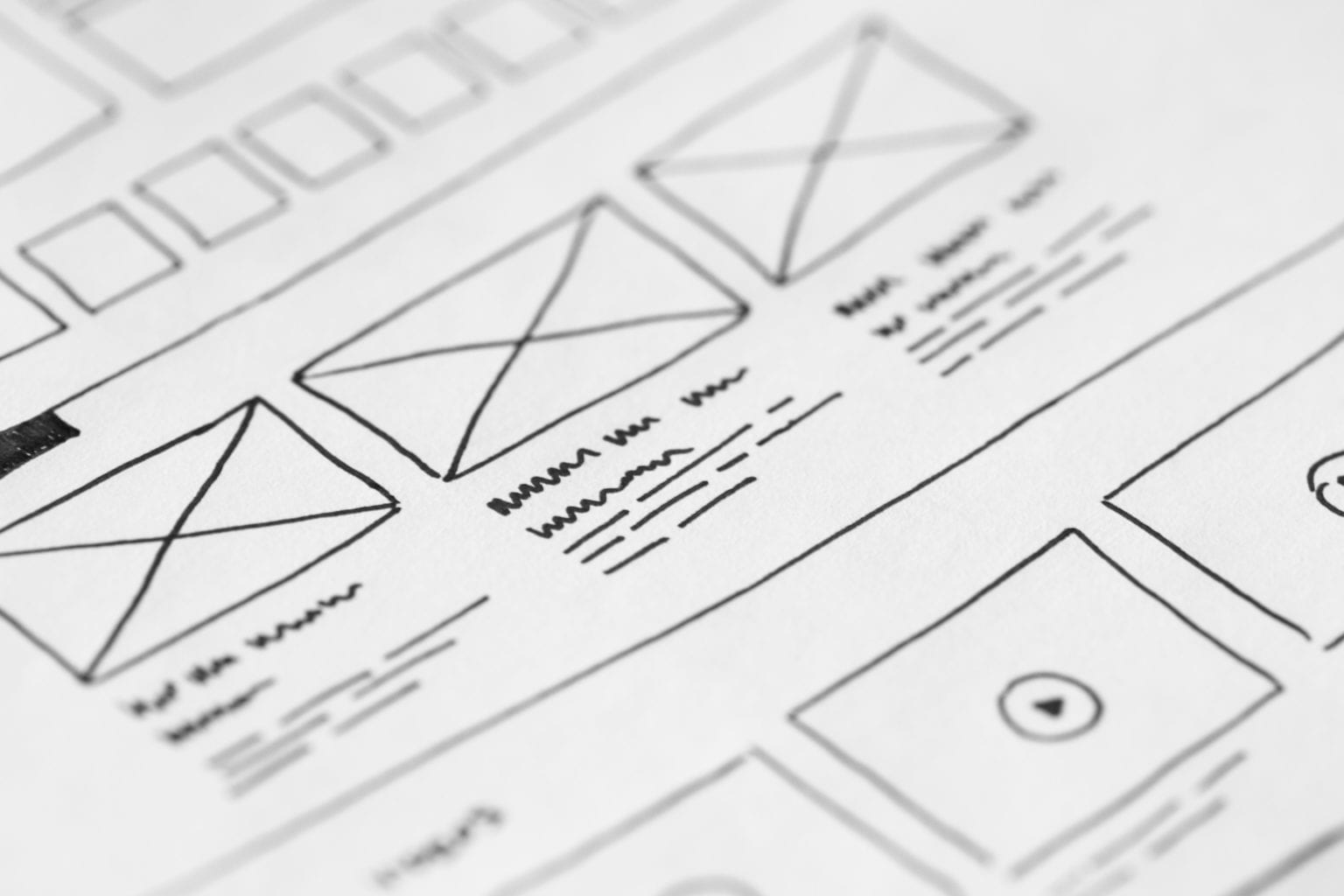
If a sitemap offers a blueprint for what content your website will contain, a wireframe offers a blueprint for how that content will look on a page or group of pages. Wireframes are essentially mock-ups: simple design schematics that visually represent the arrangement of content on a page. A wireframe typically uses gray boxes and minimal text—often placeholder text like the lorem ipsum—to show where different types of content, such as copy, videos, pictures, and buttons, will go.
Why Are Sitemaps and Wireframes Important?
The goal of any website is to be both functional and visually appealing to users. As essential tools for UX—how users will actually experience your site—sitemaps and wireframes help you achieve both aspects of this goal.
A sitemap allows you to assess the site’s overall organization, structure, and navigation. You want to start with a sitemap to identify any points of confusion for users trying to get around your site, as well as to pinpoint any gaps in content.
Then, use a wireframe to evaluate the design functionality of each page. Wireframes also help gauge how page design may affect your content; for instance, if you see that only a small space is blocked out for a blurb or caption, you’ll know approximately how short its copy should be.
The Bottom Line
Although sitemaps and wireframes are different, both are critical to the web development process. Both allow us to make changes, give feedback, and spot problems to the foundation of the site before delving into content and graphic creation.
Need Help?
Feel free to contact us if you have any questions.
Related Blogs
Lorem ipsum dolor sit amet, consectetur adipiscing elit, sed do eiusmod tempor incididunt ut labore et dolore magna aliqua. Ut enim ad minim veniam, quis nostru.
The Real Reason Brands Move to Webflow: Clarity
Many teams are still running a website built on outdated templates, plugins, and years of quick fixes. It worked at some point… but now it’s a patchwork system that slows everything down. Mixed messaging. Inconsistent pages. Updates that feel like surgery. A site that technically “works,” but never really feels like the brand.

How We Built a Full Brand in 14 Days for GBA (Gut-Brain & Axis)
GBA (Gut-Brain & Axis) came to us with one of those rare, high-pressure situations where everything needed to come together fast. They had a career-defining meeting scheduled with a major partner—an opportunity that could change the trajectory of their company—but they had just 14 days to build what most brands spend months creating.

Building Better Digital Experiences With Webflow
Hitting the three-year mark as a Webflow Premium Partner means a lot to us at Madak. It’s not just a badge — it’s proof of the work we’ve put into helping brands build digital experiences that actually function, look good, and support their growth.
Reimagine Your Digital Impact
Transform your website, pitch decks, sales collateral and more, all with transparent, upfront, pricing.