5 min read
The Illusion of Marketing Automation

Share
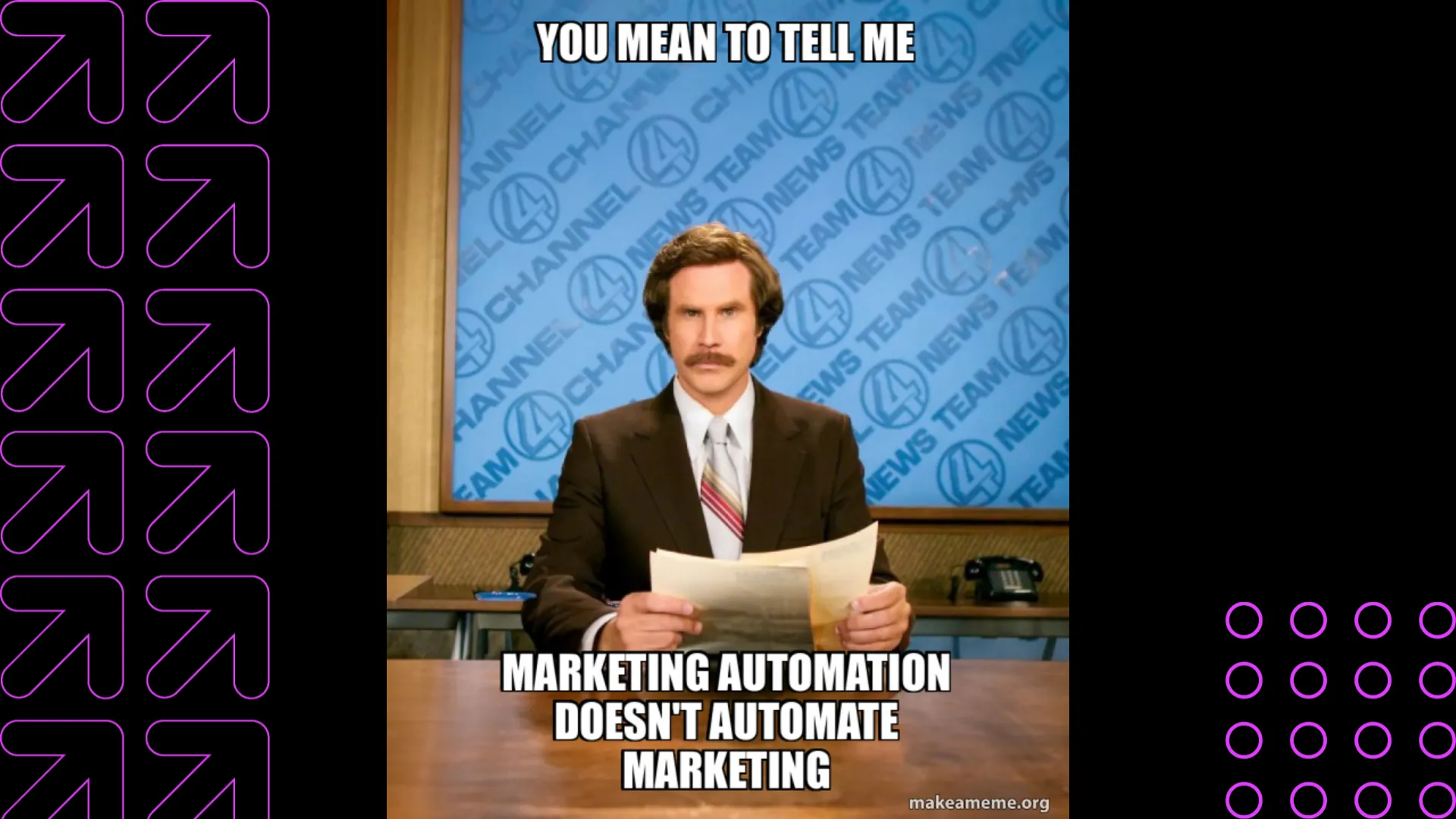
Marketing Automation is an illusion. Well, let me rephrase that marketing automation is an illusion that marketing tools are trying to sell us.
In recent years, marketing automation has been touted as the ultimate solution for streamlining processes, driving efficiency, and boosting ROI. Now add the all the new AI tools popping up that everyone one on social media telling us how easy it use and automate.
Maybe you are thinking, "What are you talking about, Elli?” These tools are amazing and they help me so much. I don’t disagree, but hear me out: even with all the fantastic tools and technology, you still need people to use them.
Effective marketing involves having the right people on your team implement the right marketing strategy. Therefore, effective marketing can never be fully automated. The key in that sentence is “effective marketing.” You can automate a ton of marketing activities, but is it working? Doing more marketing doesn’t automatically produce better output.
In marketing, a good thing to always fall back on is quality over quantity. Customers or clients will always focus on quality over quantity. Automated marketing does allow you to do more or reach more people, but it often comes across as very spammy or untrustworthy. Automated marketing loses the personal touch because we are aiming for quantity over quality. I highly recommend not sacrificing brand trustworthiness for more automation.
Let’s explore why marketing automation is not the silver bullet it's often made out to be and why brands need to approach it with caution. (also, it is okay if you want to skip to the end to find out the tools you should be using 😉)
The Complexity of Implementation
Implementing marketing automation isn't just a matter of flipping a switch—it requires careful planning, significant resources, and expertise. Integrating automation platforms with existing systems, databases, and workflows can be challenging, often requiring dedicated IT support and ongoing maintenance. Additionally, the complexity of automation tools can overwhelm users, leading to underutilization or improper configuration, which can ultimately hinder rather than enhance marketing efforts. As I said above, marketing automation is often marketed as a hands-off solution that can run on autopilot, freeing up time and resources for other tasks. But the reality is it is far more complex than that. You need someone to understand the tools and set them up correctly, test regularly, and continuously manage them.
Lack of Strategic Thinking
Automation excels at executing tasks, but it can't develop a cohesive marketing strategy. You still need human expertise to define your target audience, analyze market trends, and set realistic goals.
Creative Shortcomings
Automation platforms or tools, while powerful, cannot fully replace the nuanced creativity, intuition, and empathy inherent in human-driven marketing strategies. Over-reliance on automation can lead to generic messaging, devoid of personalization and authenticity. Customers increasingly crave genuine interactions and relying solely on automation risks alienating them with robotic communication and disconnected experiences. While some tools can personalize content to an extent, they can't replicate human creativity. Crafting compelling messaging and visuals requires an understanding of human psychology and cultural nuances – things AI is still struggling with.
Generic Solutions
Many marketing automation solutions claim to be universally applicable, offering generic templates and workflows that promise to meet the needs of any business. However, the reality is that one-size-fits-all approaches often fall short. Each business has its unique voice, brand identity, and customer journey, which off-the-shelf automation solutions cannot fully capture. Generic messaging risks diluting brand authenticity and failing to resonate with target audiences, ultimately undermining the effectiveness of marketing campaigns.
Customer Disconnect
Over-reliance on automation can lead to impersonal customer experiences. Building relationships and fostering trust requires human interaction and the ability to respond to unique customer needs in real time.
Internal Silos
Tools are only as good as they are implemented within a team or business. Marketing automation thrives on a unified approach, but it can't break down departmental silos. Alignment between marketing, sales, and customer service is critical for a seamless customer journey, and that requires human collaboration. In order for marketing automation to work, all teams need to work together to create and implement it. Honestly, any marketing activity should be communicated to the entire team, especially when trying to automate marketing tasks.
Data Misinterpretation
Marketing automation generates a lot of data, but it can't tell you what the data actually means. Human analysis is crucial for identifying trends, uncovering customer insights, and making informed decisions about your marketing direction. This circles back to strategy, you need someone or a team to interpret the data and make decisions based on the data. With automation, you are able to be more agile and quicker to adapt based on what the data is telling you, but that is all reliant on understanding the data you are gathering.
Conclusion
Marketing automation is a powerful tool, but it's not a magic bullet. By understanding its limitations, you can leverage it for what it does best: streamlining repetitive tasks and providing valuable data insights. The key lies in using automation in conjunction with human expertise—strategic thinking, creative storytelling, and the ability to build genuine customer connections. When these elements work together, marketing automation becomes a force multiplier, empowering you to deliver effective and efficient marketing that resonates with your audience and drives actual results.
If you skipped to the end, here are the tools we love:
- Zapier
- Asana
- ChatGPT
- Gemini
- More AI Tools we love
- HubSpot CRM
- Email Marketing
- Social Media Posting
- Website ChatBot
*Please note the key to choosing the right tools is how they all work together for YOU. Every business and workflow is different, but I guarantee you we can find the right tools to achieve your goals and find ways to make your marketing more efficient!
Related Blogs
Lorem ipsum dolor sit amet, consectetur adipiscing elit, sed do eiusmod tempor incididunt ut labore et dolore magna aliqua. Ut enim ad minim veniam, quis nostru.

How to Build Team Connections While Working Remotely
Despite the benefits that come with working remotely, it’s not faultless—it can be difficult for colleagues to make meaningful and collaborative connections when a screen is always separating them. With the shift to remote and hybrid working environments over the past several years, businesses of all sizes are wondering how to build and maintain strong team connections remotely. Keep reading for a brief overview of why building connections at work is so important and how to make sure you and your team members can do so even when you can’t be face-to-face.

How to Make Time for Professional Development
Making time for professional development is essential to support your long-term success. This can be a daunting task for many of us, as the modern professional world is undoubtedly a busy one. There’s always something that needs doing, and when you add all of the responsibilities from your personal life on top of that, it seems like there’s almost no time left. Keep reading to get a better understanding of what professional development is, why it’s so important, and how to prioritize it even with a busy schedule.

How to Boost Brand Awareness
Brand awareness generally refers to how well customers recognize a specific brand or product based on its name or defining features. In other words, how many people are familiar with your brand and are able to remember it in the right circumstances? Typically, the idea behind growing your brand awareness is to become a more well-known and authoritative figure in your industry. Companies with higher levels of brand awareness usually generate more sales, have more loyal customers, and can introduce new services/products more easily. Boosting brand awareness is essential for any company that wants to grow and secure a position for itself in the market, as most people tend to “buy the name” rather than the product. In fact, 71% of consumers reported that they would like to recognize the name of a brand they purchase from. So, how can you boost your brand awareness? Keep reading to find out.
Reimagine Your Digital Impact
Transform your website, pitch decks, sales collateral and more, all with transparent, upfront, pricing.