5 min read
The Tools and Strategy I Wish I Had Known About 8 Years Ago at Madak

Share
Looking back to when I first started Madak eight years ago, I realize how much time, stress, and unnecessary complexity could’ve been avoided if I had known about the right tech stack from day one. There’s a lot to be said about finding the right tools that help you streamline processes, enhance creativity, and manage a growing business efficiently.
But one thing’s for sure—having the right strategy and tech stack in place from the very beginning is critical to setting yourself up for long-term success.
These days, Madak is running smoother than ever, and I owe a lot of that to the incredible tools we use on a daily basis. So, I wanted to share the tech stack that’s helping us thrive right now—because these are the tools I wish I had known about when I first started.
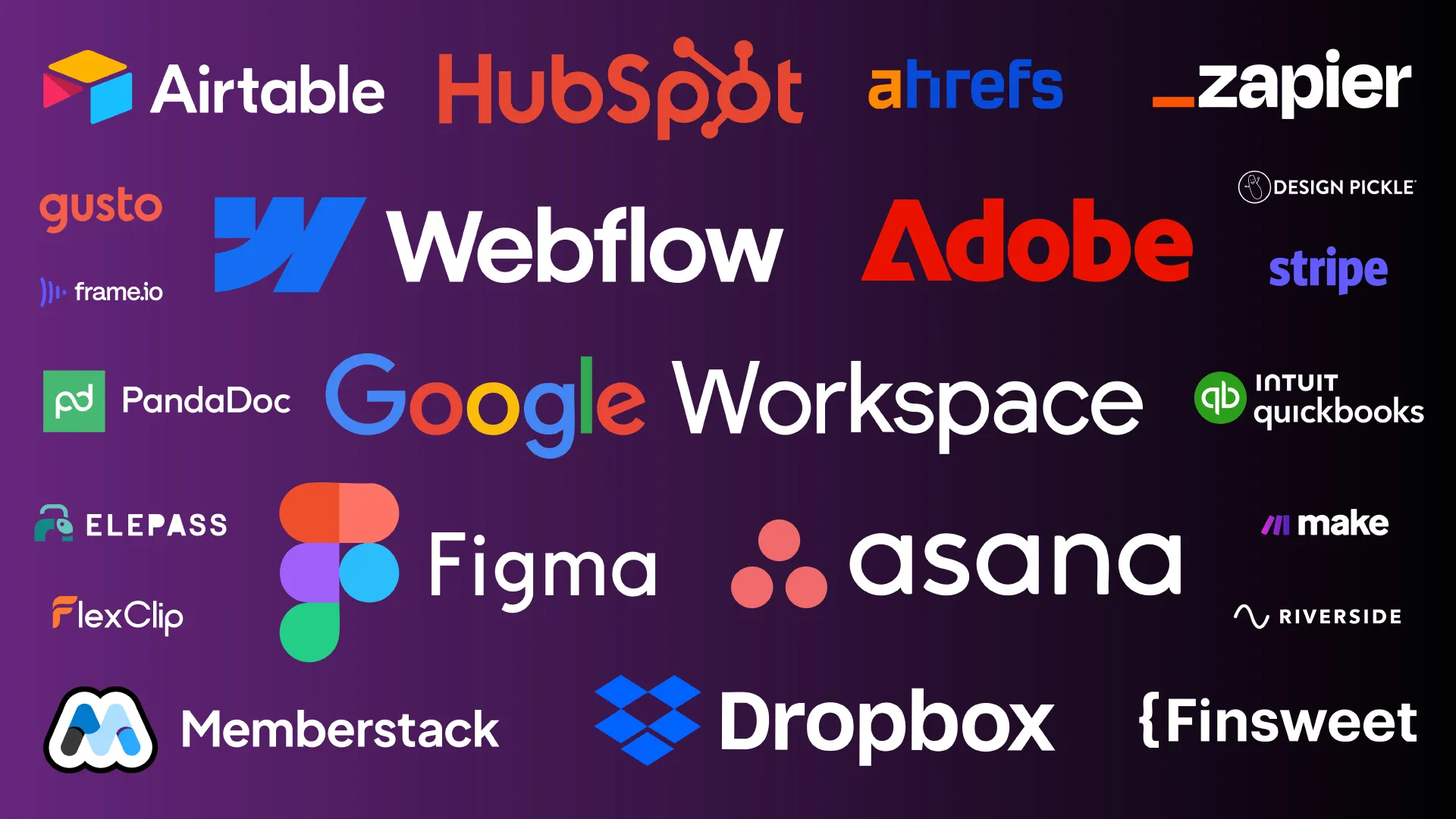
The Tech Stack We Couldn’t Live Without at Madak
Google Workspace – We use Google Workspace for just about everything. Emails, docs, calendars—it’s the backbone of our communication and planning. Without it, things would be chaos.
Asana – We track all client tasks and projects in Asana. It’s truly the lifeline of our day-to-day operations. Nothing slips through the cracks.
Webflow – This platform has given us the creative freedom we never knew we needed. Building websites is seamless, and we’ve been able to create unique, custom experiences for our clients with ease.
QuickBooks – Managing finances becomes increasingly complicated as the business grows, but QuickBooks simplifies the entire process. We’re able to stay on top of invoicing, budgeting, and financial forecasting with ease.
Figma – Figma has changed the game for designing website content. It allows our team to collaborate in real-time and work efficiently, no matter where we’re located.
Finsweet Pro – Whenever we need to push Webflow’s capabilities to the limit, Finsweet Pro steps in to give us that extra level of customization and flexibility.
Ahrefs – Keeping a pulse on SEO is essential for us, and Ahrefs helps us monitor our search rankings, track competitors, and fine-tune our digital strategies.
Zapier – Zapier connects all the apps we use, automating workflows and saving us tons of time. It’s like having an extra team member who works in the background to keep everything running smoothly.
ElePass – Keeping passwords secure is no joke, especially when managing multiple clients. ElePass stores and manages all of our passwords securely in one place, giving us peace of mind.
Design Pickle – When we need on-demand creative assets, Design Pickle delivers. It’s been crucial for keeping our projects on schedule and ensuring we have high-quality designs right when we need them.
HubSpot (Marketing & Sales) – HubSpot is our go-to platform for everything marketing and sales. It helps us automate email campaigns, track leads, and manage client relationships—all in one place.
Adobe Creative Cloud – From design to video editing, Adobe CC is where our creative ideas come to life. It’s the ultimate tool for crafting professional content.
Dropbox – All of our assets are stored in Dropbox, keeping everything organized and accessible for the entire team. No more digging through emails or folders to find what we need.
PandaDoc – Signing contracts and agreements digitally is a game changer. PandaDoc makes the entire process smooth and trackable, ensuring everything stays on course.
Gusto – From payroll to benefits, Gusto helps us manage our employees with ease. It’s an essential tool for staying organized as the team grows.
Google & Zoom – Whether we’re holding team meetings, collaborating remotely, or checking in with clients, Google Meet and Zoom are essential for keeping us connected.
Riverside.fm – Recording podcasts has never been easier. Riverside.fm makes the process seamless, allowing us to focus on the conversation instead of the technical details.
Frame.io – When it comes to video projects, Frame.io helps us gather feedback quickly and streamline collaboration. It’s an essential part of our video production workflow.
Airtable – Airtable has transformed the way we manage data. It’s customizable, easy to use, and helps us stay organized on even the most complex projects.
Make (formerly Integromat) – Make is our secret weapon for automating memberships and other processes, saving us hours of manual work.
Stripe – When it comes to payment processing, Stripe is fast, secure, and reliable. It helps us ensure smooth transactions for our clients and partners.
Memberstack – We use Memberstack to manage memberships on Webflow without the hassle. It simplifies the process of handling user access and subscriptions, making it incredibly easy to offer membership features to our clients.
FlexClip.com – For quick video resources, FlexClip is our go-to. It’s great for creating simple, no-frills videos that get the message across.
Google Gemini – Harnessing the power of AI, Google Gemini helps us boost productivity and gain insights faster than ever.
Basin – With Basin, our forms stay spam-free. It filters out unwanted submissions and keeps things clean, allowing us to focus on real leads.
But Tools Alone Aren’t Enough—You Need the Right Strategy
As helpful as these tools are, they won’t magically fix everything. You need the right strategy in place from the start. Having a clear roadmap and understanding your business goals is essential before you start integrating these tools. Without a solid strategy, even the best tech stack can only take you so far.
So before you dive in, slow down and think about your long-term goals. What do you want to achieve? How do these tools align with those objectives? Once you have a plan in place, the right tools can amplify your success and help you scale efficiently.
If you’re interested in learning more about how we use these tools and how you can implement them in your own business, let’s chat! We’ve been through the trial and error process, and we’d love to help you streamline your business for growth.
Related Blogs
Lorem ipsum dolor sit amet, consectetur adipiscing elit, sed do eiusmod tempor incididunt ut labore et dolore magna aliqua. Ut enim ad minim veniam, quis nostru.

9 Call to Action Best Practices
When determining the best marketing strategy for your business, it is essential that you take a close look at your calls to action. The call to action, or CTA, could be considered the most important part of your copy. It is the part that motivates potential customers to take action (buy, sign up, visit a page, etc.) while providing them with the necessary steps for what to do next. For this reason, creating a powerful and memorable CTA for your web copy and sales copy is vital to your company’s overall success. Keep reading to learn more about CTA best practices that will improve your marketing strategy and help you convert leads more effectively.

Landing Pages vs. Websites
The core differences between landing pages and websites can be hard to figure out, especially if you are new to the world of digital marketing. Landing pages and websites play off one another and work together to form a cohesive brand and build trust and interest in your customers and leads. Though there are similarities between landing pages and websites, the two have some important distinctions that boil down to their purpose. Keep reading to learn about some of the differences and similarities between landing pages and websites before you take the plunge and start creating your own (or before your hire someone else to help you)!

What Is Story Marketing & Why Does It Matter?
People generally dislike advertisements. They resent feeling bombarded by ads as they go about their daily lives, and according to survey results reported by HubSpot, 91% of consumers say this intrusive feeling has gotten worse in the past several years. That’s why many experts claim that the future of marketing lies in storytelling. This article will talk about what story marketing is, why it’s predicted to be the next big thing in the digital marketing industry, and what makes it an effective strategy. Along with that, we will provide you with some tips on how you can incorporate storytelling into your own advertising efforts in order to make them more successful. Let’s get started!
Reimagine Your Digital Impact
Transform your website, pitch decks, sales collateral and more, all with transparent, upfront, pricing.