5 min read
Why Clarity Is the Hardest Part of Marketing

Share
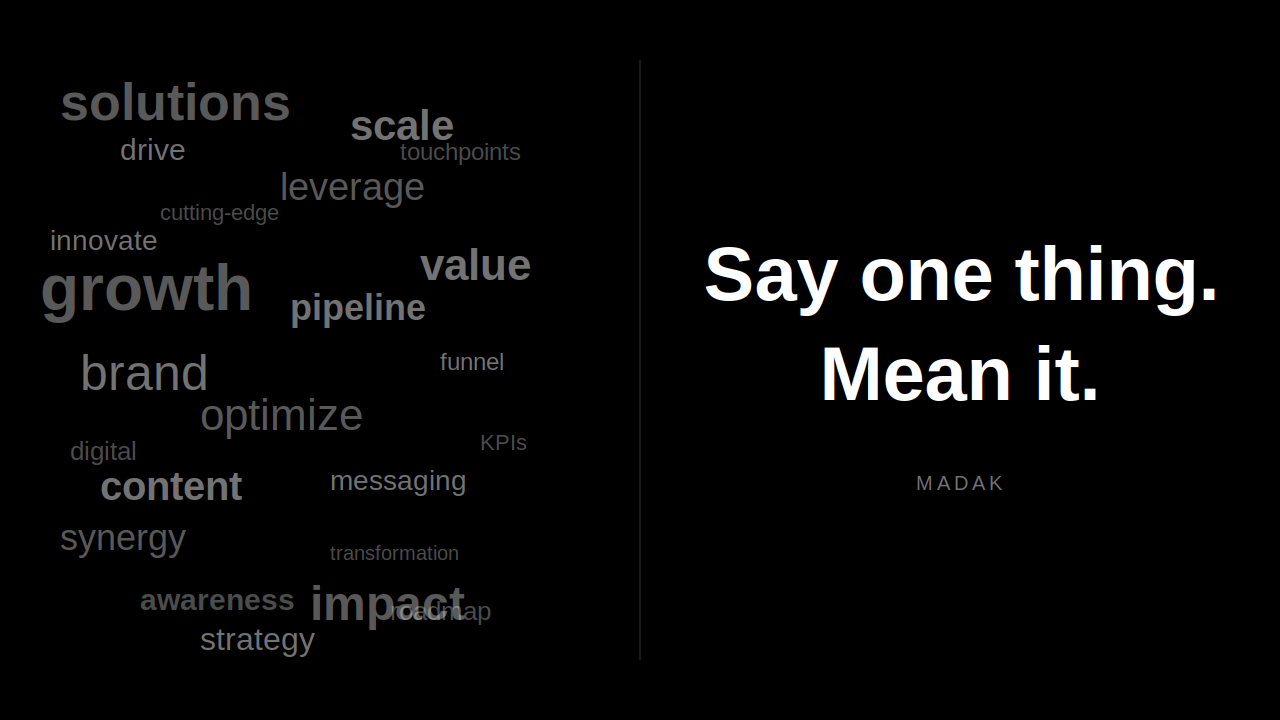
Most teams assume their messaging problem is a design problem. Or a content problem. Or maybe a "we just need to post more" problem. So they update the website, refresh the deck, hire someone to run campaigns, and hope something sticks.
But the real issue is usually harder to name. It's clarity. Or the lack of it.
Saying things simply is genuinely difficult
There's a reason most company websites explain what the company does without really explaining what the company does. Getting to clear, simple language takes a lot of work. It's not a one-afternoon exercise. It's rounds of back and forth, cutting things out, having honest conversations about what actually matters, and being willing to let go of the version that sounds impressive in favor of the version that makes sense immediately.
That process is uncomfortable. It asks people to make decisions about what the company stands for, who it's really for, and what the core thing is that they do. Those aren't easy questions. And most teams either skip them or never carve out the time to work through them properly.
What it looks like when the foundation isn't there
When clarity hasn't been sorted out, you can usually feel it even if you can't quite articulate it.
Sales and marketing are telling slightly different stories. The website has a lot of words but leaves people with questions. New hires take months to get the messaging right because nobody really handed them a clear version of it. Leadership talks about the company one way, the sales team talks about it another way, and the marketing that goes out reflects both, which means it reflects neither cleanly.
None of this is anyone's fault. It's not a performance issue. It just means the foundation work hasn't happened yet.
And when that's the case, everything built on top of it is a little shakier than it needs to be.
What changes when clarity is there
When teams actually do the work of getting clear, things shift pretty quickly.
People inside the company start describing it the same way. That sounds small but it's not. When someone in sales and someone in marketing and someone in leadership all tell the same story, that consistency starts showing up everywhere: in conversations, on the website, in proposals, in how the company is perceived.
The website starts doing more of the work. Marketing becomes less of a guessing game because everyone's starting from the same place. Decisions get easier because there's a clear filter for what fits and what doesn't.
It doesn't mean everything is figured out. But it means the foundation is solid enough to build on.
The part that often gets skipped
A lot of agencies will help you execute. They'll build the site, run the ads, write the content. And there's real value in that. But if the messaging underneath isn't clear, execution just spreads the confusion faster.
The work that matters most is the part that happens before any of that. Getting alignment between leadership, sales, and marketing. Figuring out what the company actually does and who it's actually for. Making sure the way you talk about your business matches the way your best customers already understand it.
That's the work. The rest follows.
If you're not sure whether your messaging is doing what it should be, it's worth taking a look. Sometimes a fresh set of eyes on the website and the collateral can surface things that are hard to see from the inside.
Related Blogs
Lorem ipsum dolor sit amet, consectetur adipiscing elit, sed do eiusmod tempor incididunt ut labore et dolore magna aliqua. Ut enim ad minim veniam, quis nostru.

Grow Your Bottom Line with Automated Marketing
Automating certain tasks in business can turn hours of work into minutes, and sometimes eliminate manual processes altogether. While completely hands-off automations are the perfect solution for the daily busywork that exists just to take up valuable company time, marketing often requires more human interaction and authenticity. So what does automating your marketing look like when you want to stay in direct contact with potential leads and create valuable content? Keep reading to get some insight into what marketing automation is, how it helps your business, and some tips on how to implement it.

What Is CX, and Why Does It Matter?
Customer Experience, also known as CX, is more than just a customer’s opinion of a product or service. Every single interaction that a customer has with your brand or business makes up the Customer Experience. This includes the first time someone discovers you through social media or a lead generation email, their satisfaction with the purchasing process and the product itself, and their interactions with customer service and support.
.webp)
Build Your Business Through Strategic Thinking
You may know the terms “outside of the box thinking”, “creative thinking” and “lifelong learning”. These phrases are synonymous with having an open mind, a desire to understand and innovate, and a constant drive to know more. When someone with these traits is also logical, great at communicating, and goal oriented, they are an exceptional strategic thinker.
Reimagine Your Digital Impact
Transform your website, pitch decks, sales collateral and more, all with transparent, upfront, pricing.