5 min read
Your Marketing Should Change Constantly. Your Message Never Should.


Share
Marketing that worked six months ago probably isn't working the same way today. Not because something broke. Because everything just moves faster now, and standing still for even a quarter can quietly cost you.
You should change your marketing strategy often, sometimes monthly, as platforms, algorithms, and buyer behavior shift. What you should almost never change is your core message. Confusing the two is how teams end up making the wrong adjustments at the wrong time.
The Problem Isn't Tactics. It's What Teams Touch by Mistake
There's no single tactic that's right or wrong right now. Paid social, SEO, email, content, all of it needs constant attention and small course corrections. That part isn't controversial.
The trouble starts when a team, frustrated that something stopped working, reaches for the wrong lever. Instead of adjusting the platform mix or the weekly cadence, they start rewriting the actual values or the core message. That's the moment things get shaky.
Once the message starts shifting, people inside the company lose track of what they're actually supposed to be saying. Sales reps describe the offer one way. Marketing describes it another. Nobody's wrong exactly, they're just no longer saying the same thing.
Why the Damage Shows Up Late
Here's what makes this especially dangerous right now: with how fast AI is reshaping distribution, search, and buyer research, a messaging gap doesn't hurt you immediately. Nobody notices in week one.
It shows up later, in how the team operates. Sales starts fielding questions marketing never prepared them for. Content starts feeling disconnected from what closers are actually saying on calls. Eventually, it shows up in the numbers, and by then it's a lot harder to trace back to the root cause.
This is the part most teams get backwards. They see slowing results and assume the message is stale, so they start rewriting it. Usually the message wasn't the problem. The execution around it drifted, and nobody caught it early enough.
What It Looks Like When It's Working
When this is handled well, it actually looks pretty simple from the outside. The message stays steady, month after month, even quarter after quarter. What changes underneath it is the strategy: which platforms get the budget, what the daily and monthly approach looks like, how content gets distributed.
Because everyone still knows what the company stands for, those day-to-day adjustments don't throw anything off. A new channel doesn't require a new story. A shift in algorithm doesn't require a rebrand.
This is also usually the point where marketing and sales stop just existing near each other and start actually working together. They're pulling from the same message, so the tactical changes on the marketing side don't create friction on the sales side. Everyone's still telling the same story, just through different channels.
Frequently Asked Questions
How often should a business change its marketing strategy? Often. Platforms, algorithms, and buyer behavior shift constantly, so the tactical layer, channels, cadence, formats, should get reviewed and adjusted regularly, sometimes monthly. Treat this layer as fluid by design.
How often should a company change its core marketing message? Rarely, if ever. Your core message reflects your values and positioning, which shouldn't shift just because a tactic stopped working. If your message needs to change, it should be a deliberate strategic decision, not a reaction to a slow quarter.
Why do marketing and sales drift apart over time? Usually because the underlying message isn't being reinforced consistently. When marketing starts adjusting the story instead of the strategy, sales keeps operating off the old version, and the two teams end up telling different stories to the same buyers.
How do I know if my results are dropping because of messaging or execution? Start by checking whether your team can still describe your offer the same way, consistently, without checking a doc. If everyone's aligned there and results are still slipping, it's almost always execution or channel fatigue, not the message itself.
Can AI-driven changes in search and distribution affect this? Yes. As AI reshapes how people find and evaluate businesses, gaps between what marketing says and what sales says become more visible and more costly, since buyers now cross-reference information from more sources before ever talking to someone.
Where This Usually Needs a Second Set of Eyes
Most teams inside a business are too close to their own message to see where it's drifted. That's not a knock on anyone, it's just hard to catch inconsistency in something you say every day. If any of this sounds familiar, happy to take a look at what's shifted for you lately and where it might be worth tightening things up. No pressure either way.
Related Blogs
Lorem ipsum dolor sit amet, consectetur adipiscing elit, sed do eiusmod tempor incididunt ut labore et dolore magna aliqua. Ut enim ad minim veniam, quis nostru.
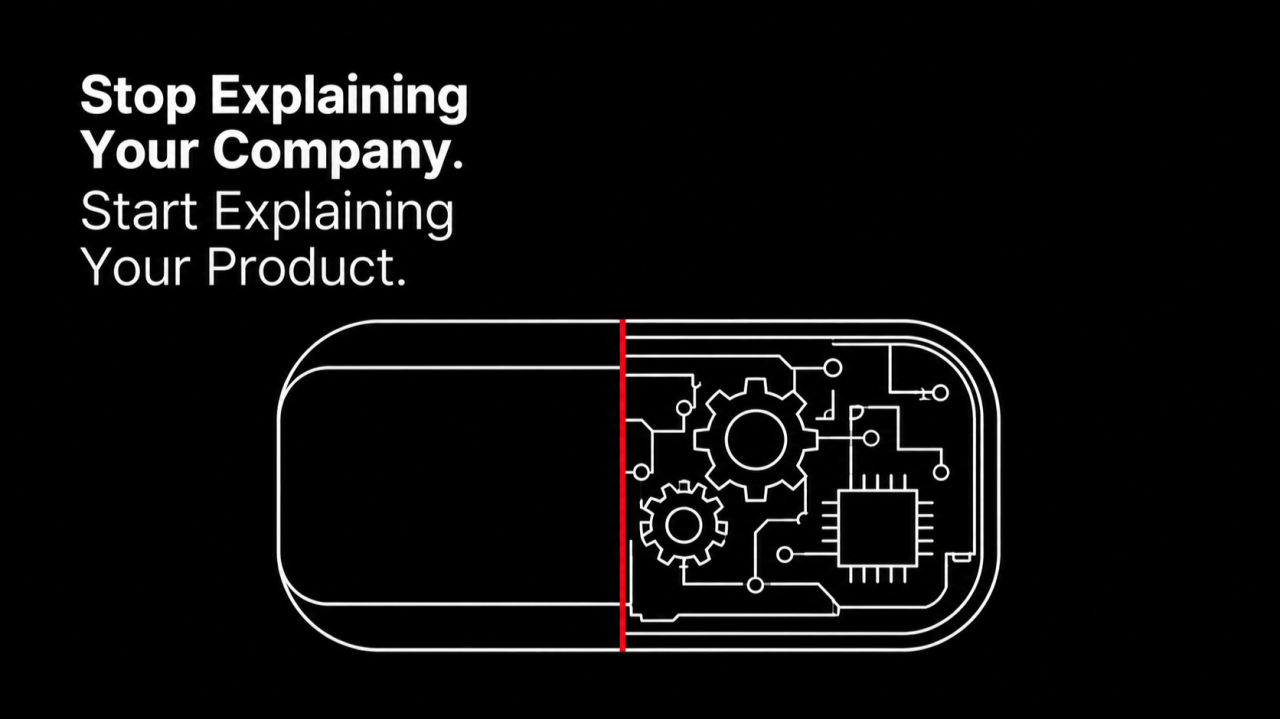
Your Website Talks About Your Company. Does It Explain Your Product?
Most B2B websites are built to answer one question: who are you? Mission, values, team, maybe a client logo wall. What they almost never answer is the question that actually gets deals moving: what do you make, and how does it work?
Reimagine Your Digital Impact
Transform your website, pitch decks, sales collateral and more, all with transparent, upfront, pricing.