5 min read
Your Website Needs Two Things to Work. Most Sites Only Have One.

Share
If you're running a company right now, chances are you've put real time into how your website looks. But that's just half the job.
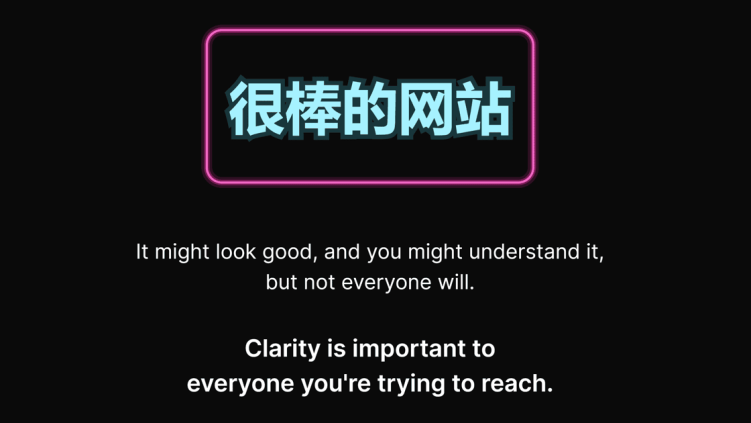
A website succeeds when design and messaging work together, not when one covers for the other. Good design earns attention and trust in the first few seconds. Clear messaging turns that attention into understanding. Miss either one, and the site underperforms no matter how strong the other half is.
Design Gets You in the Door
A site that looks sharp still matters. It signals that a company is legitimate, current, and worth a few more seconds of attention. Nobody sticks around on a site that feels dated or sloppy, no matter how good the underlying offer is.
But design's job stops there. It opens the door. It doesn't explain what's on the other side of it. That part falls to the message, and a lot of teams assume a strong layout will carry that weight on its own. It won't.
Messaging Is What Happens Once They're In
Once someone's on the page, design has done its job, and the message takes over. This is where a visitor decides whether they understand what you do, whether it applies to them, and whether it's worth reading further.
That takes real work. It's back and forth, cutting things down, and being honest about what actually matters enough to say. A beautifully designed page with a muddled message still loses the visitor, just a few seconds later than an ugly one would.
How to Tell Which One Is Missing
You can usually tell which half is broken. If people bounce almost immediately, before they've had time to read anything, that's often a design or first-impression issue. If they stick around, scroll, and still leave without understanding what you do, that's a messaging problem wearing a nice outfit.
Another sign shows up internally. Sales says one version of the story, marketing says another, and the site tries to hold all of it at once. A site can look completely put together and still be saying three different things depending on which page you land on.
What It Looks Like When Both Are Working
When design and messaging are both solid, the whole thing feels effortless from the outside, even though it wasn't. Your team describes the company the same way without checking with each other first. The site looks like it belongs to a real company, and it also tells you clearly and quickly what that company actually does.
Neither one is decoration for the other. The design makes people willing to listen. The message gives them a reason to keep listening. Skip either step and you're left explaining why the site isn't converting despite all the work that went into it.
Frequently Asked Questions
Is design or messaging more important for website conversions? A: Neither wins on its own. Design gets attention and builds initial trust. Messaging converts that attention into understanding. A site strong in one but weak in the other will still underperform, just for different reasons depending on which half is missing.
How do I know if my website's problem is design or messaging? A: Look at when people leave. Fast bounces before they've scrolled usually point to design or first impression. Visitors who scroll, spend time, and still leave confused about what you do usually point to a messaging problem.
Can strong messaging make up for weak design, or the other way around? A: Not really. Strong messaging on a dated or clunky site struggles to earn the attention it needs to land. Strong design with a muddled message earns attention but loses people once they start reading. Both need to hold up their end.
What's the first step to fixing a site that has one of these problems but not the other? A: Get honest about which one is actually weak before touching anything. Ask your team to describe the company in one sentence and see if everyone agrees. Separately, watch how visitors behave on the current site. That combination usually points to the real issue fast.
Related Blogs
Lorem ipsum dolor sit amet, consectetur adipiscing elit, sed do eiusmod tempor incididunt ut labore et dolore magna aliqua. Ut enim ad minim veniam, quis nostru.

Top Video Marketing Channels to Grow Your Business
People like to be engaged with the content they consume, and videos are the king of engagement. Video marketing is becoming increasingly important as video-based platforms rise in popularity and younger generations turn to videos for information and advertisements. Some recent studies even state that a significant portion of Gen-Z prefers to see ads in short-form video format. As a marketer, you likely already know that one of the best ways to capture your audience’s attention and grow your business is with entertaining, informative, high-quality, and easily digestible video content. In this article, we will talk about the best video marketing channels and how they can help you grow your business.

Why Madak Uses StoryBranding
In the best-selling book Sapiens: A Brief History of Humankind by Yuval Noah Harari, he calls humans “storytelling beings.” For centuries, our ancestors have been sharing stories with each other in one form or another. First, stories were only shared by word of mouth, then with paintings and symbolic art, and then through the written word. Our love for stories hasn’t changed, though we may consume them differently in the modern day. We watch movies and TV shows, read books and blogs, and even consume stories through social media platforms such as YouTube and TikTok. Humankind’s love for stories can also be a very effective tool for marketing. Businesses and marketing agencies everywhere — Madak included — use a story framework to connect with their target audiences and grow their brand. This article will give insight into why we use StoryBranding at Madak, how we do it, and what inspired us to start.

6 Effective Ways to Automate and Grow Your Business
Automation is more readily available than ever before. There are numerous ways you can go about automating your business, especially your marketing tasks. You can easily schedule emails that will be sent whenever you want, follow up on abandoned cart leads, coordinate all tasks between your different team members, and much more. This is all thanks to the many new project management tools that are available. Even though most people know about these automation opportunities, not everyone chooses to use them. Instead, many people opt for the traditional, well-known way of doing things. This means they’re missing out on incredible opportunities to save money, time, and effort! This article will present you with six effective ways to automate your business that aren’t overly complicated to implement and will provide you with numerous benefits. Let’s get started!
Reimagine Your Digital Impact
Transform your website, pitch decks, sales collateral and more, all with transparent, upfront, pricing.