5 min read
Your Website Needs Two Things to Work. Most Sites Only Have One.

Share
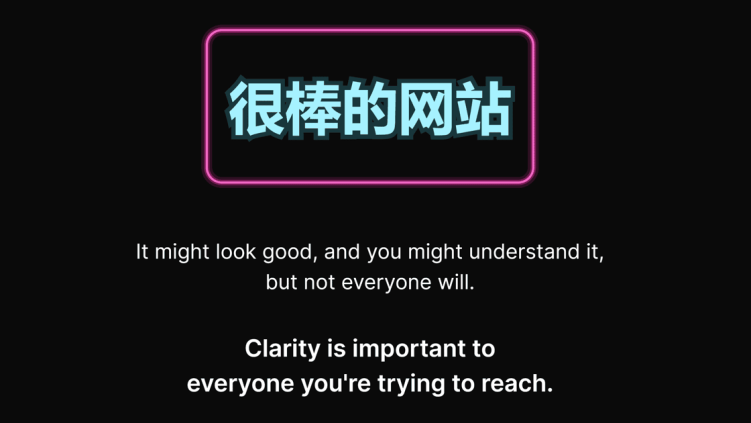
If you're running a company right now, chances are you've put real time into how your website looks. But that's just half the job.
A website succeeds when design and messaging work together, not when one covers for the other. Good design earns attention and trust in the first few seconds. Clear messaging turns that attention into understanding. Miss either one, and the site underperforms no matter how strong the other half is.
Design Gets You in the Door
A site that looks sharp still matters. It signals that a company is legitimate, current, and worth a few more seconds of attention. Nobody sticks around on a site that feels dated or sloppy, no matter how good the underlying offer is.
But design's job stops there. It opens the door. It doesn't explain what's on the other side of it. That part falls to the message, and a lot of teams assume a strong layout will carry that weight on its own. It won't.
Messaging Is What Happens Once They're In
Once someone's on the page, design has done its job, and the message takes over. This is where a visitor decides whether they understand what you do, whether it applies to them, and whether it's worth reading further.
That takes real work. It's back and forth, cutting things down, and being honest about what actually matters enough to say. A beautifully designed page with a muddled message still loses the visitor, just a few seconds later than an ugly one would.
How to Tell Which One Is Missing
You can usually tell which half is broken. If people bounce almost immediately, before they've had time to read anything, that's often a design or first-impression issue. If they stick around, scroll, and still leave without understanding what you do, that's a messaging problem wearing a nice outfit.
Another sign shows up internally. Sales says one version of the story, marketing says another, and the site tries to hold all of it at once. A site can look completely put together and still be saying three different things depending on which page you land on.
What It Looks Like When Both Are Working
When design and messaging are both solid, the whole thing feels effortless from the outside, even though it wasn't. Your team describes the company the same way without checking with each other first. The site looks like it belongs to a real company, and it also tells you clearly and quickly what that company actually does.
Neither one is decoration for the other. The design makes people willing to listen. The message gives them a reason to keep listening. Skip either step and you're left explaining why the site isn't converting despite all the work that went into it.
Frequently Asked Questions
Is design or messaging more important for website conversions? A: Neither wins on its own. Design gets attention and builds initial trust. Messaging converts that attention into understanding. A site strong in one but weak in the other will still underperform, just for different reasons depending on which half is missing.
How do I know if my website's problem is design or messaging? A: Look at when people leave. Fast bounces before they've scrolled usually point to design or first impression. Visitors who scroll, spend time, and still leave confused about what you do usually point to a messaging problem.
Can strong messaging make up for weak design, or the other way around? A: Not really. Strong messaging on a dated or clunky site struggles to earn the attention it needs to land. Strong design with a muddled message earns attention but loses people once they start reading. Both need to hold up their end.
What's the first step to fixing a site that has one of these problems but not the other? A: Get honest about which one is actually weak before touching anything. Ask your team to describe the company in one sentence and see if everyone agrees. Separately, watch how visitors behave on the current site. That combination usually points to the real issue fast.
Related Blogs
Lorem ipsum dolor sit amet, consectetur adipiscing elit, sed do eiusmod tempor incididunt ut labore et dolore magna aliqua. Ut enim ad minim veniam, quis nostru.

Business Tools Madak Uses Daily
In this fast-paced digital age, all businesses can benefit from the help of tools and applications to work more effectively. With that said, choosing what software to use and pay for is a difficult task. There’s so much variety in the market and it can be challenging to wade through all the options. In this article, we will talk about the software and applications we use at Madak and why we’ve chosen them. Keep reading to get some insight into these tools and to learn more about how Madak uses them to remain efficient, creative, and reliable (and how you can do the same)!
Email Design Best Practices
Email marketing provides a direct line of communication with your customers, and it allows you to keep track of their engagement with your brand. Email marketing also allows you to build relationships with your customers over time, resulting in more sales in the future. Today, marketing emails should provide more than just text to impress a reader. It’s important to make sure that your emails are not only well-written but well-designed to increase user interest and engagement. Keep reading for some tips on email design best practices.

LinkedIn Post Ideas for Businesses
As a business building (or maintaining) an online presence, one of the most important platforms to bear in mind is LinkedIn; however, LinkedIn can be an intimidating place to navigate when used for online marketing. Usually, more strategy is involved when trying to market your brand than when an individual is trying to make connections or grow professional awareness on LinkedIn, so how should you go about it as a business? Keep reading for some LinkedIn post ideas that can help your business build its digital presence.
Reimagine Your Digital Impact
Transform your website, pitch decks, sales collateral and more, all with transparent, upfront, pricing.