5 min read
Cracking the Code: B2B Web Design vs. B2C Web Design

Share
Welcome to the wild world of web design, where creativity meets strategy, and user experience is paramount. But did you know that not all websites are created equal? In fact, the approach to web design can be drastically different for B2B and B2C websites. While they share the same goal of driving results, their design philosophies are worlds apart. Today, we'll explore the exciting realm of web design and uncover the key distinctions that set B2B web design apart from its B2C counterpart.
Single Customers vs. Audience Groups:
In the epic battle of B2B vs. B2C web design, the first clash occurs in the arena of audience targeting. B2C websites are all about that one special customer, crafting a personalized experience just for them. Meanwhile, B2B websites play the field, catering to multiple personas within an organization. Think of it as a dating show for websites – B2C goes on a romantic date, while B2B meets the whole family.
- B2C: Personalized experiences for individual consumers.
- B2B: Tailored UX for different personas and teams.
B2B websites score points by offering:
- Persona self-selection for a variety of users
- High-level copy and in-depth case studies
- Clear data visualization for complex products.
Educating vs. Impulse Buying:
In the red corner, we have B2C websites, known for their flashy graphics and persuasive content designed to trigger impulse purchases. B2B websites, on the other hand, take a more scholarly approach. They're like the professor of the web design world, focusing on education over urgency.
- B2C: Urgent, flashy content for quick conversions
- B2B: Informative and educational content for the long game
B2B websites educate visitors with:
- Compelling value propositions
- Detailed product specifications
- Real-world case studies and testimonials
- Industry certifications and standards
Longer Sales Cycles:
In the left corner, the B2C sales cycle – short, sweet, and to the point. It's like speed dating, with customers making quick decisions. In the right corner, is the B2B sales cycle – a slow burn that can last months or even years. It's like a complex dance with multiple partners, each step carefully choreographed.
- B2C: Lightning-fast sales cycles
- B2B: Extended sales journeys with many stakeholders
To succeed, B2B websites:
- Establish trust, quality, and expertise
- Avoid pushy sales tactics
- Position themselves as B2B experts
- Focus on long-term relationships
Custom Pricing vs. Fixed Cost:
Finally, the showdown between custom pricing and fixed cost. B2C websites keep it simple with set prices for their products. In contrast, B2B websites navigate a labyrinth of custom pricing, where negotiation is the name of the game.
- B2C: Fixed, straightforward pricing
- B2B: Customized, negotiable pricing
Web design strategies for B2B websites include:
- Defining and addressing your value proposition
- Promising quick responses to inquiries
- Using concise lead generation forms
- Offering interactive price calculators
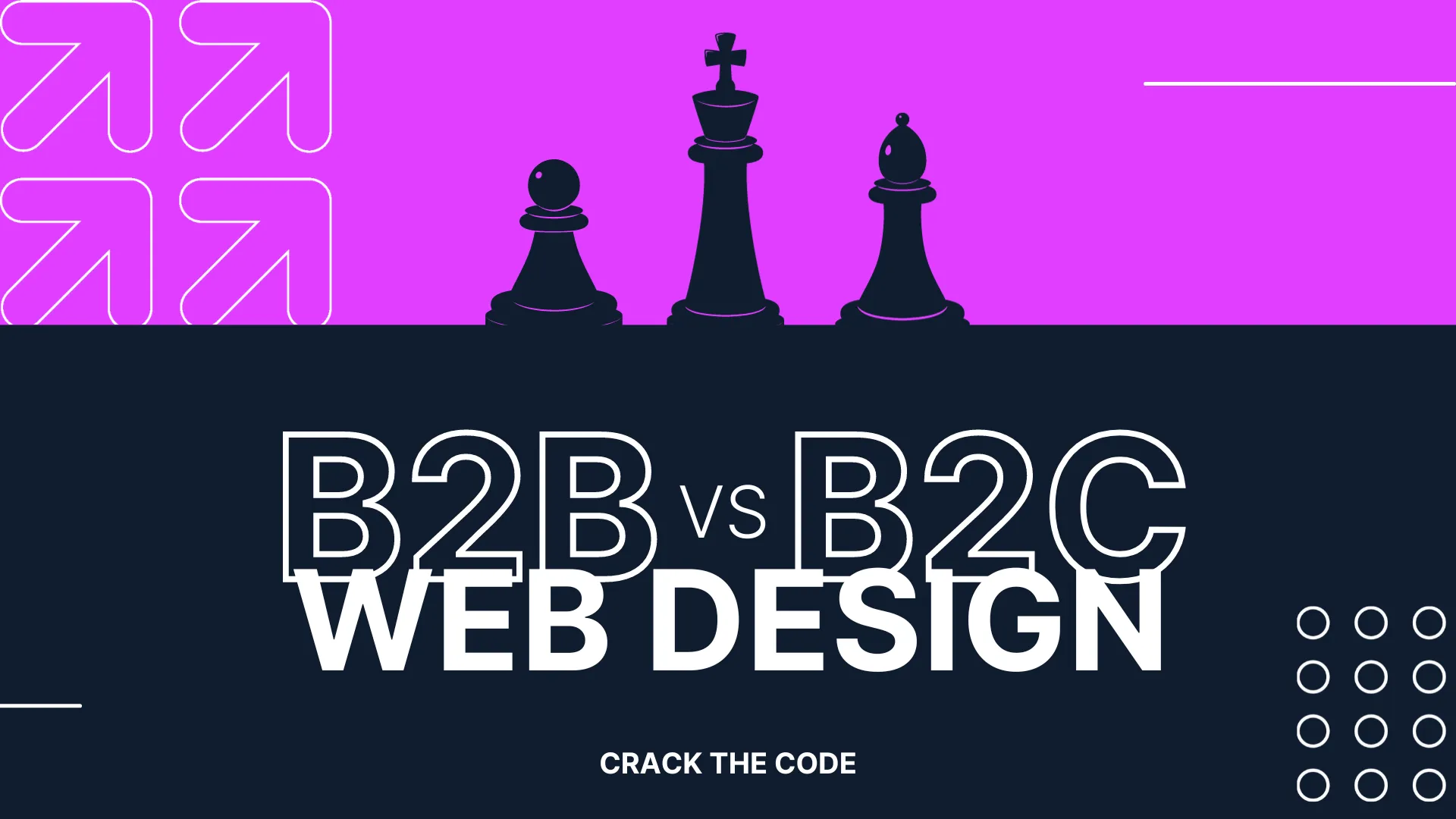
In the thrilling world of web design, B2B and B2C websites are like rivals in a high-stakes game of chess. They may share the same goal – to capture hearts (and wallets) – but their strategies are as different as night and day. So, when it comes to designing your website, make sure you choose the right playbook – one that caters to your unique audience and business goals. If you need some more inspiration, read our article on the Creative Possibilities in Webflow. After all, in this epic showdown, it's not just about checkmates; it's about conversions, sales, and online success!
Related Blogs
Lorem ipsum dolor sit amet, consectetur adipiscing elit, sed do eiusmod tempor incididunt ut labore et dolore magna aliqua. Ut enim ad minim veniam, quis nostru.

How To Get the Most Out of Video Marketing
Video marketing has become a mainstream strategy for businesses in almost every industry. Consumers often prefer videos, as they retain more information (95% retention) from a video as opposed to reading something in text format (10% retention). Marketers have also reported that using videos in their marketing strategy has generated more leads and helped customers better understand the offered products and services. These are only a few examples of the benefits of developing a great video marketing strategy. Creating video content can also humanize your brand, help with visibility, allow you to break into a different market, and more. Keep reading to get a deeper look into the modern-day video marketing strategy and learn how to get the most out of it.

How You Can Improve Your Organic SEO
It can be difficult to get a high ranking on Google’s search engine results pages (SERPs) without the help of paid ads. The algorithm that Google uses to rank websites constantly changes, and no one has a completely perfect organic SEO strategy. Additionally, many companies invest a lot of money into SEO research, making your task even harder. With that said, there are several things you can do to improve your organic SEO strategy that doesn’t involve spending money. Check out these three simple steps you can take to rank better and increase website traffic ASAP.

Why Digital Ads Are More Important Than Ever
Most businesses nowadays operate online or at the very least have some sort of an online presence. And that’s for a good reason. People spend large parts of their day scrolling through social media, chatting with friends, or looking up different topics on Google. That’s why if you want to get your company and product in front of its target audience, the best way to do that is by creating digital ads. Additionally, due to the COVID-19 crisis that we’ve all had to face, more and more people have started doing their shopping entirely online, which further emphasizes the need for digital marketing.
Reimagine Your Digital Impact
Transform your website, pitch decks, sales collateral and more, all with transparent, upfront, pricing.