5 min read
Giving Constructive Feedback


Share
Everyone’s a critic, right? Actually, yes—when it comes to marketing deliverables, everyone has the potential to give feedback, whether it’s for a new logo, a website design, or a digital ad. The trick is learning how to give comments that are genuinely helpful, rather than overly negative or the dreaded “I don’t know.” Here, we offer six insights into providing more constructive feedback to either your internal team or hired professionals!
Concentrate on Goals
Always concentrate on the project goals. What is the goal of the design, and which parts of the design are supposed to help reach that goal?
For example, if you think about why you dislike a new logo design, you may realize it’s not because the chosen font is “ugly”, it’s because an over-embellished, looping cursive just isn’t the right choice for your audience of hip, young Gen-Z customers. Connecting your comments back to the project objectives will also keep you focused on major concerns rather than minor nitpicks.
Try trading in language like “good” or “bad” for words like “effective” and “ineffective.” The former sound like moral judgments or personal attacks, while the latter simply note that a project may not be aligning with its intended impact.
Highlight the Positives
It’s all too easy to fall into the trap of only pointing out what needs to be changed and fixed, but this is a surprisingly ineffective way of providing feedback. In fact, research from Harvard Business School shows that overly negative feedback rarely leads to improvement—people who feel too criticized will just seek out a new source of feedback.
Instead, balance your critiques by highlighting the positives. This doesn’t mean “sandwiching” a critique between compliments—a model that can come off as fake; it means telling creatives what you genuinely think is working. And, to be more effective in the long run, positive feedback helps people know what to continue doing next time.

Remain Focused
Did you ever receive a page covered in red ink that made you feel completely overwhelmed? To make your feedback more constructive, focus on a handful of actionable points that you feel a designer or writer could reasonably address before the next stage of the project. If you’re working with a large team, consolidate everyone’s feedback into a few paragraphs or bulleted points, rather than giving a designer pages upon pages of comments to sift through.
Be Flexible and Respectful
The most constructive feedback shouldn’t come in the form of ultimatums or demands; it should start a dialogue between you and your colleague. Presumably they were hired for their expertise, so trust their skills! Ask a lot of questions and be willing to entertain pushback or alternative suggestions in response to your comments.
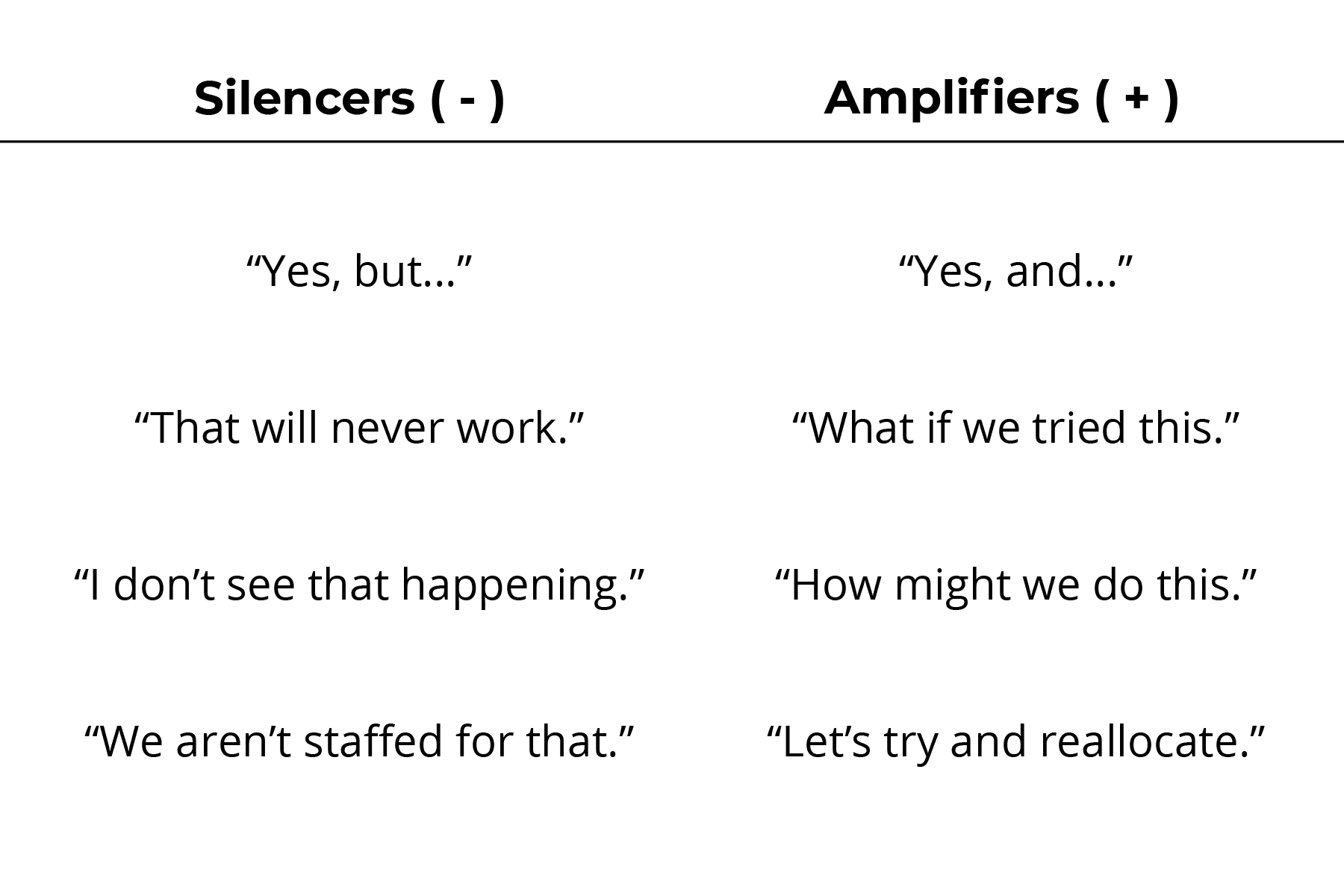
Take a page out of Pixar’s book with their “yes, and” strategy—tweak your feedback so that it adds to the conversation and moves it forward, rather than shutting it down. For example, asking “What if we tried this?” is much more productive than saying “That won’t work.”
Time Your Feedback Wisely
Don’t forget to consider the logistics. You should build clear points into any project where feedback will be collected, delivered, discussed, and acted upon, each with a realistic timeframe for everyone involved. Remember, surprise critiques, particularly on unfinished drafts, don’t help anyone—not only do they swallow a lot of time, but checking in on works in progress every few hours will make the project feel micromanaged.
Be Specific
Does anyone really know what a comment like “Clean this up!” or “Make it pop” means? Here are some tips for articulating your thoughts in order to be less vague.
- Provide clear examples. If there’s another design, logo, piece of copy, or other project that you really like from somewhere else, make sure to provide the designer with the specific example as a guide, preferably early in the process.
- Don’t make it personal. Keep your attention on feedback for the project in front of you, not work that this person may have done in the past (even if it’s work that you like!).
- Back it up with data. Point to the exact lines, frames, items, or images you’re talking about whenever you bring up a new idea. Try to break your feedback down into organized sections, not just broad, sweeping comments.
- Avoid vague filler. What do you mean by “okay”? If “some people say”—who’s the “some”? Use “because” statements to clarify: “I liked X and Y because” is much clearer than “I like it.”
The Bottom Line
Giving feedback can be an intimidating task, but it doesn’t have to be. As long as you keep your feedback goal-oriented, respectful, and specific, you’ll find yourself giving more constructive feedback than you thought you could. Use these tips to make sure no feathers are ruffled and no one is left confused ever again!
Need Help?
Feel free to contact us if you have any questions.
Related Blogs
Lorem ipsum dolor sit amet, consectetur adipiscing elit, sed do eiusmod tempor incididunt ut labore et dolore magna aliqua. Ut enim ad minim veniam, quis nostru.

How to Build Team Connections While Working Remotely
Despite the benefits that come with working remotely, it’s not faultless—it can be difficult for colleagues to make meaningful and collaborative connections when a screen is always separating them. With the shift to remote and hybrid working environments over the past several years, businesses of all sizes are wondering how to build and maintain strong team connections remotely. Keep reading for a brief overview of why building connections at work is so important and how to make sure you and your team members can do so even when you can’t be face-to-face.

How to Make Time for Professional Development
Making time for professional development is essential to support your long-term success. This can be a daunting task for many of us, as the modern professional world is undoubtedly a busy one. There’s always something that needs doing, and when you add all of the responsibilities from your personal life on top of that, it seems like there’s almost no time left. Keep reading to get a better understanding of what professional development is, why it’s so important, and how to prioritize it even with a busy schedule.

How to Boost Brand Awareness
Brand awareness generally refers to how well customers recognize a specific brand or product based on its name or defining features. In other words, how many people are familiar with your brand and are able to remember it in the right circumstances? Typically, the idea behind growing your brand awareness is to become a more well-known and authoritative figure in your industry. Companies with higher levels of brand awareness usually generate more sales, have more loyal customers, and can introduce new services/products more easily. Boosting brand awareness is essential for any company that wants to grow and secure a position for itself in the market, as most people tend to “buy the name” rather than the product. In fact, 71% of consumers reported that they would like to recognize the name of a brand they purchase from. So, how can you boost your brand awareness? Keep reading to find out.
Reimagine Your Digital Impact
Transform your website, pitch decks, sales collateral and more, all with transparent, upfront, pricing.