5 min read
The Power of Personalization in Marketing

Share
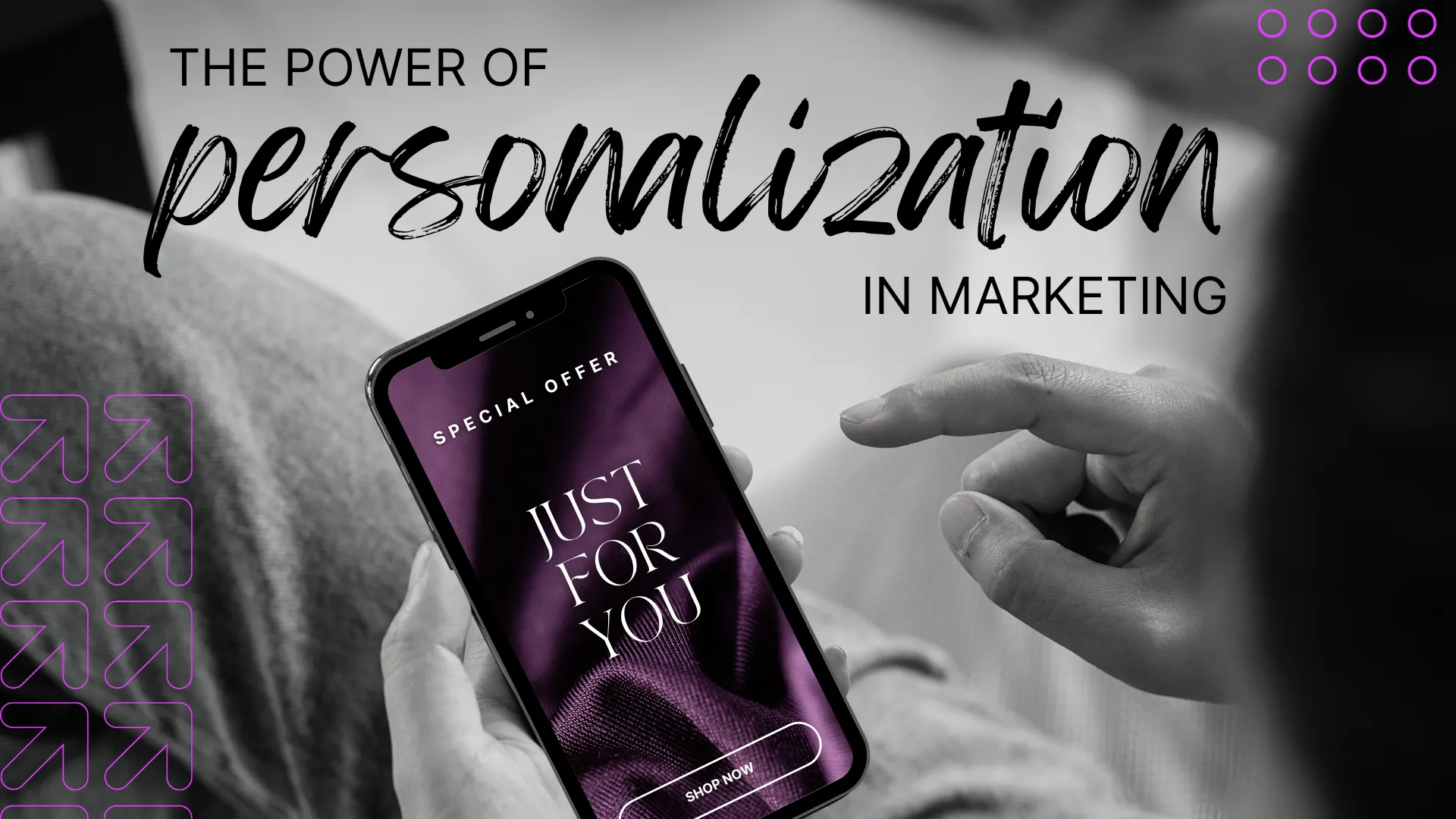
One strategy in marketing that has consistently proven to work, and one that I have personally witnessed change the way you connect with your audience, is personalization. But what you are probably wondering is how you can add personalization to your marketing. And for clarity throughout this post, I will use these terms synonymously:
- personalization = targeted messaging
- audience = customers/potential customers
What Is Personalization In Marketing?
Personalization in marketing is a strategy to better engage your audience by better understanding their needs, preferences, and motivations. It involves knowing your target audience’s age, gender, location, and interests. Knowing who you are talking to allows you to personalize or create tailored messaging that actually resonates with your audience throughout all of your marketing.
A good example of this is that the way you speak to Gen Z is different than Boomers. Right? If you know most of your audience is of a specific generation, that would definitely influence how you speak to them. What I have seen over and over again is brands making assumptions about their audience but never actually looking at any data to support those assumptions. Making assumptions in marketing often leads to missed opportunities.
Personalized marketing is more than just adding personalized tokens in your emails. It involves creating messaging and visuals that truly resonate with your audience.
A New Era of Marketing
Marketing is no longer just about broadcasting a generic message to the masses. Today, it's about establishing meaningful, authentic connections with individuals in your audience.
Personalization is the bridge that leads us to this new era of marketing. It enables brands to engage customers in a way that feels uniquely tailored to their preferences, needs, and desires. It’s why when you are endlessly scrolling on social media, the ads feel like they are directly listening to you. I mean TikTok shop has an absolute chokehold on me right now, shhhh don’t tell my husband 😏
Receiving an email that addresses you by your first name, recommends products based on your past purchases, and even acknowledges your special occasions with exclusive offers makes us feel valued, and that's precisely the magic of it. Cause who doesn’t love a good birthday discount email?
When your audience feels valued, they are more likely to engage with your brand and, ultimately, become loyal customers. And more importantly, continue to receive your marketing.
When brands have personalized messaging, I am willing to receive daily emails and follow them on multiple platforms, but the brands lacking personalization quickly get the hater button or send to my special spam email, which I only visit to find discount codes.
The marketing KPIs to examine when looking at personalization are the engagement data points. Like, How long are people spending time on your website? Are they sharing your posts? Are they commenting? How long are video watch times? Are they engaging with your marketing?
The Data-Driven Advantage
Have you ever thought that your phone was listening to your conversations because you saw an oddly specific ad? Well, good news, it’s not, but your behavior on the internet is being tracked, particularly on social media platforms and Google. Now, we won’t get into the weeds on this topic, but we would like to talk about how a lot of this can work to your advantage in marketing.
Personalization relies heavily on data, and the more data you have, the more personalized and effective your marketing efforts can be. The wealth of data available today provides a goldmine of insights that can be used to create personalized experiences. From website behavior to purchase history, demographics, and social media interactions, data offers a treasure chest of information to tap into.
In simpler terms, utilizing platforms, particularly a CRM, to aggregate your data becomes an invaluable tool that allows you to quickly synthesize and learn who your audience is and what is working and what is not working. These tools allow you to set up automations that can work for you. When you have 100s or 1000s of customers, there is no way you add a personalized touch to all of your marketing without the help of tools that can do it for you.
Here at Madak, we have seen how data-driven personalization can potentially transform your bottom line. Analyzing consumer behavior and preferences allows you to begin to predict future needs, offer relevant products or services, and create highly targeted personalized marketing campaigns.
Enhancing Customer Experience
Personalization extends far beyond marketing messages. Making sure that your personalization is consistent across all of your marketing and sales materials, website, email marketing, and socials has the power to enrich the entire customer experience with your brand. It creates an AUTHENTIC experience.
I've observed how well-executed personalized marketing guides a customer seamlessly through their entire journey and beyond. By presenting them with exactly what they're looking for at the right time, you can reduce friction, encourage them to complete their transactions, and create loyalty. Customers who experience a smooth, tailored journey are more likely to return for future interactions or encourage others to purchase your products or services.
When working with clients, I consistently remind them that customer experience starts long before they enter your funnel and extends past their first purchase. We may live in a world where most of our shopping is done online, but we are still looking for that mom-and-pop experience when making purchases. This applies to both B2C & B2B.
It is Ever-Evolving
The power of personalization in marketing is a topic that continually evolves. As technology advances and consumer expectations change, staying ahead of the curve is essential. You can do this by continuing to utilize tools that allow you to see your audience and examine your marketing efforts for engagement and effectiveness. And yes, embracing AI and machine learning can help you deliver even more sophisticated and effective personalization.
I've learned that the key to marketing success is a commitment to ongoing learning and adaptation. Keeping up with the latest trends, tools, and strategies is important when harnessing the full potential of personalization in marketing. Or find someone who can do this for you!
Personalization in marketing is not just a passing trend; it's a shift in how you engage with your audiences through data-driven insights and enhanced customer experiences. Personalization empowers you to connect on a deeper level with your audience. Continue to discover the importance of personalization in our article Email Marketing Has Changed.
Related Blogs
Lorem ipsum dolor sit amet, consectetur adipiscing elit, sed do eiusmod tempor incididunt ut labore et dolore magna aliqua. Ut enim ad minim veniam, quis nostru.
9 Call to Action Best Practices
When determining the best marketing strategy for your business, it is essential that you take a close look at your calls to action. The call to action, or CTA, could be considered the most important part of your copy. It is the part that motivates potential customers to take action (buy, sign up, visit a page, etc.) while providing them with the necessary steps for what to do next. For this reason, creating a powerful and memorable CTA for your web copy and sales copy is vital to your company’s overall success. Keep reading to learn more about CTA best practices that will improve your marketing strategy and help you convert leads more effectively.

Landing Pages vs. Websites
The core differences between landing pages and websites can be hard to figure out, especially if you are new to the world of digital marketing. Landing pages and websites play off one another and work together to form a cohesive brand and build trust and interest in your customers and leads. Though there are similarities between landing pages and websites, the two have some important distinctions that boil down to their purpose. Keep reading to learn about some of the differences and similarities between landing pages and websites before you take the plunge and start creating your own (or before your hire someone else to help you)!

What Is Story Marketing & Why Does It Matter?
People generally dislike advertisements. They resent feeling bombarded by ads as they go about their daily lives, and according to survey results reported by HubSpot, 91% of consumers say this intrusive feeling has gotten worse in the past several years. That’s why many experts claim that the future of marketing lies in storytelling. This article will talk about what story marketing is, why it’s predicted to be the next big thing in the digital marketing industry, and what makes it an effective strategy. Along with that, we will provide you with some tips on how you can incorporate storytelling into your own advertising efforts in order to make them more successful. Let’s get started!
Reimagine Your Digital Impact
Transform your website, pitch decks, sales collateral and more, all with transparent, upfront, pricing.