5 min read
Why Most Marketing Feels Fake

Share
Marketing doesn't fail because the copy's bad or the design's dated. It fails because the company behind it doesn't actually know what it is, and no amount of polish covers that up. People can feel the difference between a brand that knows itself and one that's guessing.
Authentic marketing comes down to clarity, not creativity. It means being specific about who you are, what you offer, and who it's for, and cutting away everything that sounds good but doesn't mean much. Companies that nail this don't work harder at marketing. They work harder at knowing themselves first.
Authenticity Isn't a Tone, It's a Clarity Problem
Most people think authenticity is a writing style: casual, warm, "real." It's not. It's whether a company can say plainly and specifically what it does and who it's for, without padding it with language that sounds impressive but says nothing.
You can spot the difference immediately. A company that knows exactly what it is sounds specific even when it's brief. A company that doesn't know what it is sounds broad even when it's long. Length was never the issue. Precision is.
That's why more content or a flashier design rarely fixes a messaging problem. If the foundation is vague, dressing it up just makes the vagueness louder.
Why Simple Messaging Is So Hard to Get To
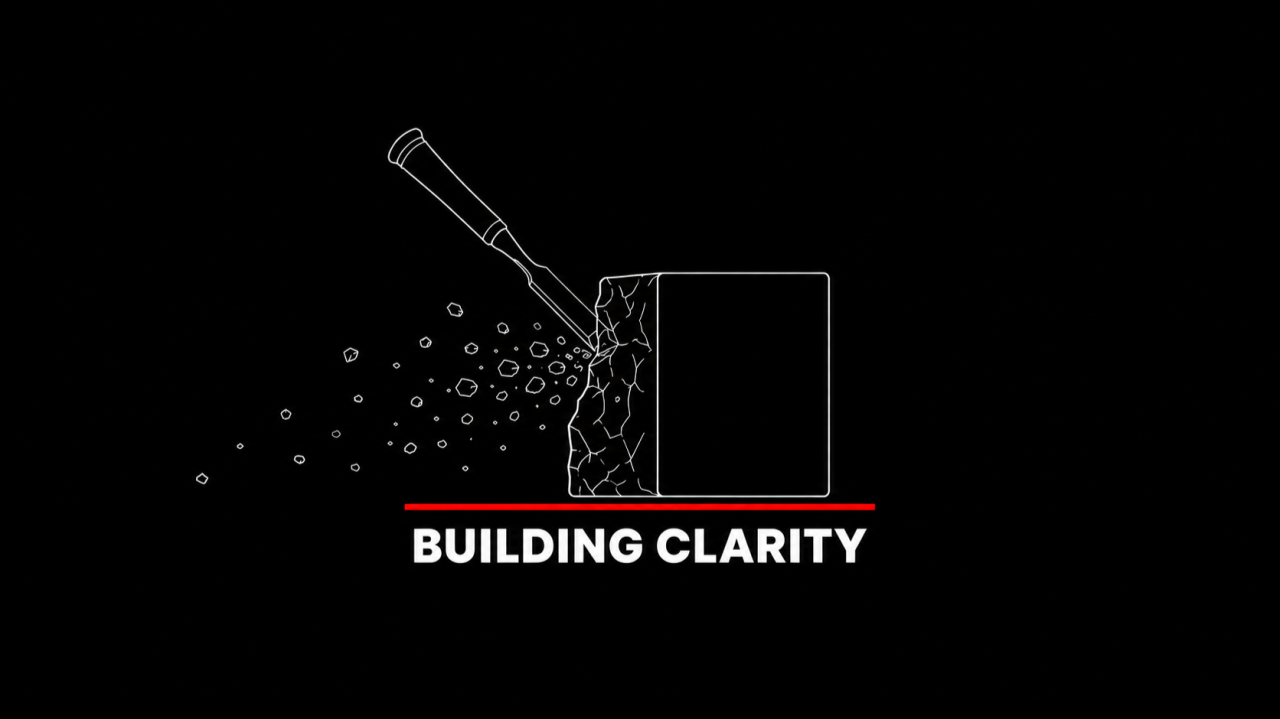
Here's the part that surprises people: saying who you are simply is harder than saying it elaborately. Simple requires you to know what to leave out, and figuring that out takes real work.
It usually takes actual conversations, the kind with back and forth, disagreement, and a few false starts. It requires someone willing to say "that sounds good, but it's not true" and mean it. Most teams skip that step because it's uncomfortable, and they end up with messaging built on what sounds impressive instead of what's accurate.
The companies that get this right aren't more talented at writing. They're more willing to have the hard conversation before they write anything at all.
What Happens When Clarity Is Missing
When a company hasn't done this work, it shows up everywhere at once. The website says one thing, the sales team says another, and the ads say a third. None of it contradicts outright, it just doesn't quite connect, and prospects feel that disconnect even if they can't name it.
This is usually where marketing starts to feel like an uphill push. Every campaign has to work harder because it's compensating for a gap that content alone can't close. You end up optimizing headlines and CTAs when the actual problem is upstream of all of it.
What Changes Once Clarity Exists
When a company does know exactly what it is, marketing stops feeling like persuasion. It starts feeling like recognition. The right prospects read the website and think "that's exactly it," instead of "sure, I guess that could work for us."
That shift changes the job of every piece of content you produce. Instead of trying to convince someone you're worth considering, you're just handing them language that confirms what they were already sensing. That's a fundamentally easier position to market from, and it's the difference between marketing that performs on paper and marketing that actually connects.
Frequently Asked Questions
Q: What does "authentic marketing" actually mean? A: It means your messaging accurately and specifically reflects who you are and who you serve, without inflated language or vague positioning. It's less about tone and more about precision.
Q: Why does messaging feel scattered even when each piece looks fine on its own? A: Usually because there's no shared, agreed-upon clarity underneath it. Different teams fill that gap differently, so the website, sales conversations, and ads all drift slightly apart.
Q: Can better copywriting or design fix inauthentic messaging? A: Not on its own. If the underlying positioning is vague, better execution just makes the vagueness more visible. The fix has to happen at the strategy level first.
Q: How do companies actually find this clarity? A: Through direct conversations that push past the first draft of "what sounds good" to what's actually true. It usually takes some back and forth and a willingness to cut things that don't hold up.
Q: Is this a one-time project or an ongoing thing? A: It's worth revisiting anytime the business shifts, whether that's a new offer, a new audience, or growth that's outpaced the original positioning. Clarity has a shelf life.
Related Blogs
Lorem ipsum dolor sit amet, consectetur adipiscing elit, sed do eiusmod tempor incididunt ut labore et dolore magna aliqua. Ut enim ad minim veniam, quis nostru.

10 Proven Ways to Reduce Your Bounce Rate
Reducing your website’s bounce rate is one of the best things you can do to boost user engagement and site rankings, eventually increasing customer conversions. Many people lack knowledge on what constitutes a good vs. bad bounce rate and how to reduce it. First things first—according to Semrush, “a bounce rate of 56% to 70% is on the high side,” and “an optimal bounce rate would be in the 26% to 40% range.”If your website is struggling to get attention and it’s challenging for you to find leads from web traffic, it might be time to look at what you can do to reduce your bounce rate. Keep reading!

9 Call to Action Best Practices
When determining the best marketing strategy for your business, it is essential that you take a close look at your calls to action. The call to action, or CTA, could be considered the most important part of your copy. It is the part that motivates potential customers to take action (buy, sign up, visit a page, etc.) while providing them with the necessary steps for what to do next. For this reason, creating a powerful and memorable CTA for your web copy and sales copy is vital to your company’s overall success. Keep reading to learn more about CTA best practices that will improve your marketing strategy and help you convert leads more effectively.

Landing Pages vs. Websites
The core differences between landing pages and websites can be hard to figure out, especially if you are new to the world of digital marketing. Landing pages and websites play off one another and work together to form a cohesive brand and build trust and interest in your customers and leads. Though there are similarities between landing pages and websites, the two have some important distinctions that boil down to their purpose. Keep reading to learn about some of the differences and similarities between landing pages and websites before you take the plunge and start creating your own (or before your hire someone else to help you)!
Reimagine Your Digital Impact
Transform your website, pitch decks, sales collateral and more, all with transparent, upfront, pricing.