Have you noticed how much marketing looks the same lately? Scroll through a few company websites or a feed full of ads and you’ll see the same layouts, the same soft gradients, and the same stock-looking people smiling at their laptops. A lot of that sameness comes from AI-generated marketing, and I think most business owners have felt it even if they haven’t put a name to it yet.
AI-generated marketing tends to look the same because AI tools build from patterns in work that already exists. That makes the output polished but average, so it lands in the middle alongside everyone else’s. The brands that stand out pair AI’s speed with human decisions about what makes the business different and what’s worth showing.
Why does AI-generated marketing all look the same?
AI is fast, and honestly, the results usually look good. You can get a clean website section, a flyer layout, or a set of social graphics in minutes, and none of it looks amateur. That’s a real step up from where a lot of small and mid-sized companies were a few years ago.
The catch is how it gets there. AI works from what already exists, so when you ask it for something modern and professional, it gives you a smart average of everything it has seen labeled that way. Your competitor is asking for the same thing, often with the same tools and nearly the same prompt, and getting a very similar answer.
So everything drifts toward the middle. And right now, the middle is getting crowded.
What happens when your brand blends in?
This is a bigger problem than it sounds. If your flyer looks like your competitor’s flyer, or your posts look like every other post in someone’s feed, people scroll right past. They don’t stop to compare you, because nothing gave them a reason to notice you in the first place.
What makes this tricky is that nothing looks broken. Everything can look nice and still not look like you. You can have a polished website, a sharp ad, and a consistent Instagram grid, and a prospect still won’t remember which company it belonged to an hour later.
That’s the quiet cost of blending in. You paid for the marketing, it went out on time, it looked professional, and it didn’t do the one job it had, which was to make someone think of you when they need what you sell.
What AI doesn’t know about your business
AI doesn’t know your business. It doesn’t know what actually wins you customers, the reason your best clients stuck around, or the thing people say about you when they refer a friend. It can’t tell which of your strengths matters to a buyer and which one only sounds impressive in a meeting.
Those answers live with people. They come out of conversations with your team and your customers, and they usually take some digging. Someone has to ask good questions, listen for the answer that keeps coming up, and then make real choices about what to show and what to leave out.
That last part matters more than people expect. Standing out is often less about adding something clever and more about having the confidence to cut what doesn’t belong to you, like the generic headline or the stock photo that could sit on any company’s homepage.
How do you build brand differentiation with AI in the mix?
Good designers take those decisions and turn them into a look that’s clearly yours. Once you know what makes you different, the visual choices start to follow: the photography you use, the way your headlines sound, the colors you lean on and the ones you avoid. When that thinking is in place, it carries everywhere your brand shows up, whether that’s your website or a trade show banner.
Here’s a simple test you can run this afternoon. Pull up your homepage next to two competitors’ homepages and cover the logos. If you can’t immediately tell which one is yours, your customers can’t either. Try the same thing with your last few social posts and a competitor’s feed.
If that test makes you a little uncomfortable, that’s useful information. It doesn’t mean you have to throw out your AI tools or start over. It usually means the decisions about what makes you different were never made, or were made once and then lost somewhere between the strategy and the final file.
How we use AI at Madak
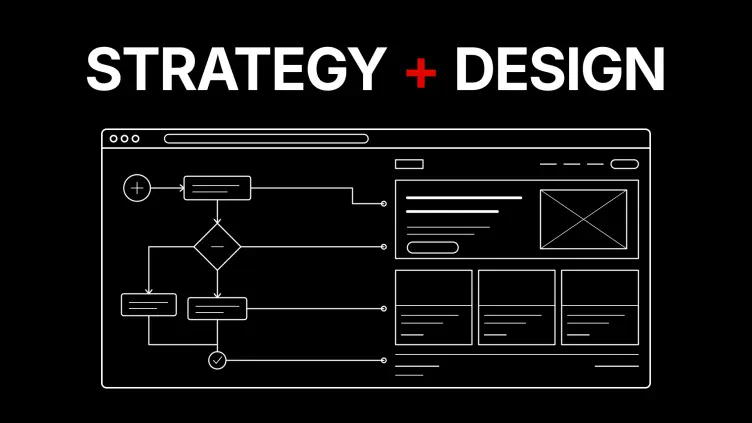
We use AI every day at Madak to move faster. It helps us draft, test ideas, and get to a first version much quicker than we used to, and I’d be lying if I said we’d go back. Our approach is AI-powered systems with human-led strategy, and that order is on purpose.
The speed is the AI. The decisions that make a brand stand out still come from people, from the questions we ask clients early on and the judgment calls about what deserves space on the page. AI helps us get there sooner, and people make sure where we end up actually looks like the client.
Frequently Asked Questions
Is it bad to use AI for marketing design? No. AI is a great tool for moving faster and producing clean, professional work. The risk comes when it’s making the decisions that should come from you, like what your brand emphasizes and how it should feel. Use it for speed and keep people in charge of the choices.
Why does AI design look so generic? AI tools generate work based on patterns in what already exists, so their output tends to reflect the most common version of a style. When many companies use similar tools and similar prompts, the results start to look alike. That’s why so much marketing now shares the same layouts and imagery.
How can I tell if my brand is blending in with competitors? Put your website or recent marketing next to a few competitors and hide the logos. If it’s hard to tell whose is whose, you’re probably blending in. Another sign is when prospects describe you in the same words they’d use for anyone else in your industry.
Can AI and human designers work together? Yes, and that’s where the best work happens right now. AI handles the speed and the early drafts, while designers and strategists make the calls about what makes the brand distinct. The combination gets you work that’s both fast and recognizably yours.
Want a second opinion?
AI made it easy to look professional, which means looking professional isn’t enough to stand out anymore. What separates you is the stuff only you and your customers know, turned into a look nobody else can copy.
If you’re not sure where you land, send me a few things you’ve put out recently, like your website or a handful of recent posts. I’ll tell you honestly where you stand out and where you might be blending in. You can reach us at madak.com.