5 min read
Why the People Who Do It Best Can't Explain It

Share
The closer you are to your work, the harder it is to describe it. That's not a personal failing. It's just how expertise works, and most business owners experience it without ever naming it.
Direct Answer: It's hard to explain what your business does because expertise creates blind spots. When you've spent years building something, every detail feels load-bearing. You can't tell what to cut because everything still matters to you. An outside perspective strips that away and finds the version your audience can actually absorb.
The Problem Isn't That You Can't Communicate
Most business owners who struggle with messaging aren't bad communicators. They're highly capable people who know their work inside and out, and that depth is exactly what makes clear, simple messaging feel like a betrayal.
When you've spent years refining a process, building a team, and thinking about edge cases, "we help businesses grow" sounds embarrassingly thin. It doesn't honor the complexity. So you add more. You explain the nuance. You include the caveats. And suddenly your homepage reads like a capabilities brief nobody asked for.
The instinct is understandable. The result isn't working.
What an Outside Perspective Actually Does
There's a common misconception that outside help means someone smarter comes in and figures out what you couldn't. That's not usually what happens. What actually happens is simpler: the outside person doesn't share your blind spots.
They hear your pitch the way a prospective customer would, without any of the context you've built up over years. They notice the moment their eyes glaze over. They catch the jargon you've stopped hearing as jargon. They ask the obvious question you stopped asking a long time ago because you already knew the answer.
That's most of what fresh perspective actually provides: a clean read on something you've long since stopped being able to see clearly.
The Same Problem Happens Inside Agencies
Here's the honest version: this isn't just a client problem. It happens to the people doing the work, too.
Writing clear, direct messaging for someone else's business is straightforward once you understand what they do. Writing it for your own is harder. You get close to your own methods and philosophy, and suddenly the simple version feels like it undersells everything.
The discipline is recognizing when you need the same reset you give clients. It's harder to do, and it requires more honesty, but the principle is exactly the same.
How to Know If Your Messaging Has This Problem
You don't always need an outside audit to know something's off. A few reliable signals:
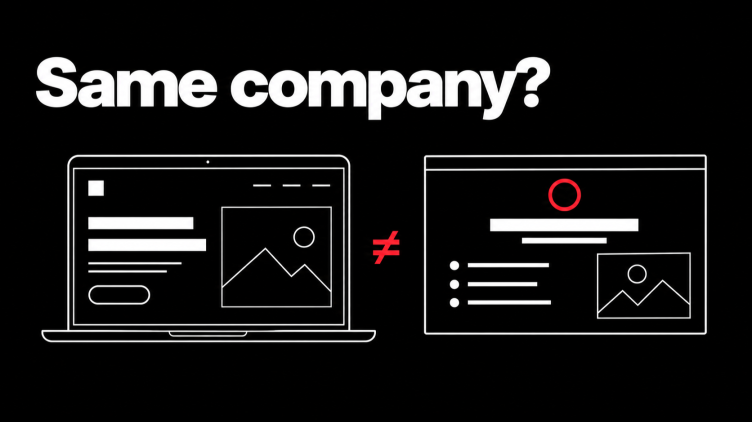
When you read your own homepage, you understand it perfectly, but new visitors seem confused. When you explain what you do in conversation, people get it immediately, but your website version sounds like a different company. When you've edited your About page six times in the last year and still aren't satisfied.
If any of those are familiar, the issue probably isn't the words. It's the proximity.
Frequently Asked Questions
Q: Why do experts struggle to explain their own work simply? A: Expertise creates context that's invisible to the people who have it. When you deeply understand something, your brain fills in gaps automatically, so you can't tell which parts a newcomer would find confusing or unnecessary. Simple explanations require stepping outside that context, which is genuinely difficult to do for yourself.
Q: What does "outside perspective" mean in practice for business messaging? A: It means having someone who doesn't already know your business read your messaging cold, and watching where they get stuck. That person might be a consultant, a copywriter, a peer outside your industry, or even a trusted customer who can articulate what you do in their own words. The point is to get a reading that isn't filtered through your own knowledge.
Q: How do I know if my business messaging is unclear? A: The clearest signal is a gap between how you explain things in conversation versus how your written materials read. If you find yourself verbally unpacking or softening your website copy when talking to prospects, that's the gap. Your spoken version is usually closer to the truth.
Q: Can I fix my own messaging without outside help? A: Sometimes. The most useful self-editing technique is to write your explanation, then ask: "Would someone who has never heard of this business understand what I just said, and why it matters to them?" Read it out loud. Anywhere you stumble is probably a problem. But the limits of this approach are real; deep familiarity with your own work makes it hard to maintain that imagined distance for long.
Q: Is this a problem only small businesses have? A: No. Large companies with robust marketing teams run into the same issue. The difference is that large organizations often have more internal stakeholders adding complexity, which makes the problem worse over time, not better. Scale doesn't solve proximity.
If your messaging doesn't quite capture what you actually do, you probably already know it. The work of getting there isn't about finding better words. It's about finding someone who can hear what you're saying without already knowing what you mean.
That's the reset most businesses need, and it's usually faster than you'd expect once you stop trying to do it alone.
Related Blogs
Lorem ipsum dolor sit amet, consectetur adipiscing elit, sed do eiusmod tempor incididunt ut labore et dolore magna aliqua. Ut enim ad minim veniam, quis nostru.
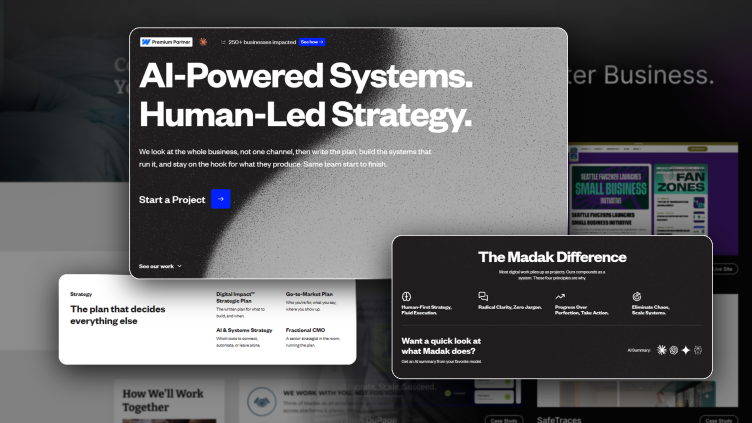
Ten Years of Madak: Thank You to the 250+ Businesses Who Trusted Us
If you've worked with Madak at any point in the last ten years, this one is for you. Ten years ago today, I started Madak on my own, and today I get to do this work alongside a team I'm genuinely proud of. That's worth stopping to say thank you for.

Reimagine Your Digital Impact
Transform your website, pitch decks, sales collateral and more, all with transparent, upfront, pricing.