5 min read
Why Your Website Isn't Converting (It's Not the Design)

Share
Most companies that invest in a new website expect the work to pay off fast. More leads, shorter sales cycles, better first impressions. And when that doesn't happen, the instinct is to blame the design. But design is rarely the problem.
The short answer: A website fails to convert when the messaging hasn't been worked out before anything gets built. No amount of visual polish can substitute for language that clearly says what you do, who it's for, and why someone should care. If those fundamentals aren't sharp, the site becomes a very expensive brochure.
Clarity Is What Converts, Not Aesthetics
There's a gap between what most companies think their site needs and what it actually needs. The visual layer gets all the attention: colors, layout, typography, animations. But visitors don't stay on a website because it's beautiful. They stay because something they read made them feel like they're in the right place.
That's a messaging problem. And messaging doesn't come from a design brief or a mood board. It comes from honest internal conversations about what the business actually does, who it genuinely serves, and what makes it different in a way that matters to a buyer. Those conversations are harder than choosing a color palette. They're also the part most teams skip.
The result tends to show up in the same ways: a homepage that explains features but not outcomes, an "About" section that talks about the company instead of the client, service pages that describe processes nobody was asking about. The site looks professional, but it doesn't pull anyone toward a decision.
What Good Messaging Work Actually Looks Like
Getting to language that converts isn't a one-afternoon exercise. It takes back-and-forth, real pressure-testing, and a willingness to cut things until what remains is both simple and accurate. Most organizations find that their first pass at describing what they do is either too vague ("we help businesses grow") or too internal ("our proprietary framework integrates cross-functional workflows"). Neither lands with a buyer.
The process of getting it right usually involves a few key questions: What does the person visiting this site believe before they arrive? What do you need them to understand that they don't yet? What's the one outcome they're really buying, not the service, the outcome? When those questions get answered clearly, writing a homepage stops being a creative exercise and becomes something closer to translation.
Good messaging also does downstream work that a redesign alone never does. Sales conversations get shorter because the foundation was already set on the website. New clients come in with more accurate expectations. The follow-up friction drops. These aren't hypothetical benefits; they're what happens when the language on the site matches the way the business actually talks about what it does.
Why Teams Rush Past It
The pressure to launch is real. There's always a timeline, a budget conversation, a stakeholder who wants to see a visual mockup before anything else. Messaging strategy doesn't photograph well. It doesn't have a deliverable that looks impressive in a Slack message. So it gets compressed, or skipped, or handled by whoever wrote the last version of the site.
The other factor is that good messaging requires internal clarity the organization might not have yet. If leadership and sales and marketing all have slightly different answers to "what do we do and why does it matter," that ambiguity shows up in the copy. The site ends up being a negotiated document instead of a persuasive one.
This is exactly the work that should happen before a developer writes a single line of code. Not after.
How to Know If This Is Your Problem
You don't need an audit to recognize the symptoms. If visitors aren't taking action on pages with real traffic, the content isn't landing. If your best salesperson can explain the business in two sentences but the homepage needs a scroll and a half to get to the point, there's a gap. If people who hire you tell you they didn't fully understand what you did until the first meeting, the site is working against you before the conversation even starts.
The fix isn't always a full rebuild. Sometimes the architecture is fine and the copy just needs to be rebuilt with the right questions in front of it. Sometimes the structure itself is the problem. Either way, the starting point is the same: get clear on the message before touching the design.
Frequently Asked Questions
Q: Can't a good designer just fix the conversion problem? A: Design improves usability and builds trust, but it can't manufacture clarity that isn't there. If the value proposition is fuzzy, a better layout just makes the fuzziness more visible. Conversion problems rooted in messaging need to be solved at the copy level before design decisions will have meaningful impact.
Q: How long does it take to develop a solid website messaging strategy? A: For most small to mid-sized businesses, a thorough messaging process takes two to four weeks when done properly. That includes discovery sessions, internal interviews, competitive review, and multiple rounds of drafting and refinement. Rushing it usually means repeating the work after the site launches.
Q: What's the difference between brand messaging and website copy? A: Brand messaging is the strategic layer: the core positioning, value proposition, audience definition, and key differentiators. Website copy is the execution of that strategy across specific pages. You need the messaging layer locked before the copy can be written well. When teams skip straight to copy, they tend to write accurate sentences that still don't persuade anyone.
Q: Does this apply to a first website or only redesigns? A: Both. First websites built without messaging clarity tend to be built around the founder's internal understanding of the business rather than a buyer's perspective. Redesigns that skip this step usually just reproduce the same problems with newer visuals. The process is the same regardless of whether the site exists yet.
Q: How do I know if my current messaging is the problem? A: Ask a few people who are close to your ideal client to read your homepage and describe what your company does. If their answers vary, or if they pull back to vague descriptors, the messaging isn't doing its job. Strong messaging produces consistent, specific responses without prompting.
Related Blogs
Lorem ipsum dolor sit amet, consectetur adipiscing elit, sed do eiusmod tempor incididunt ut labore et dolore magna aliqua. Ut enim ad minim veniam, quis nostru.
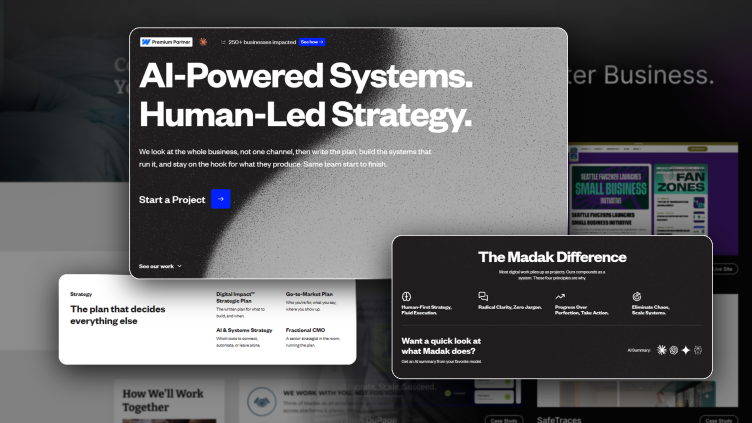
Ten Years of Madak: Thank You to the 250+ Businesses Who Trusted Us
If you've worked with Madak at any point in the last ten years, this one is for you. Ten years ago today, I started Madak on my own, and today I get to do this work alongside a team I'm genuinely proud of. That's worth stopping to say thank you for.
Reimagine Your Digital Impact
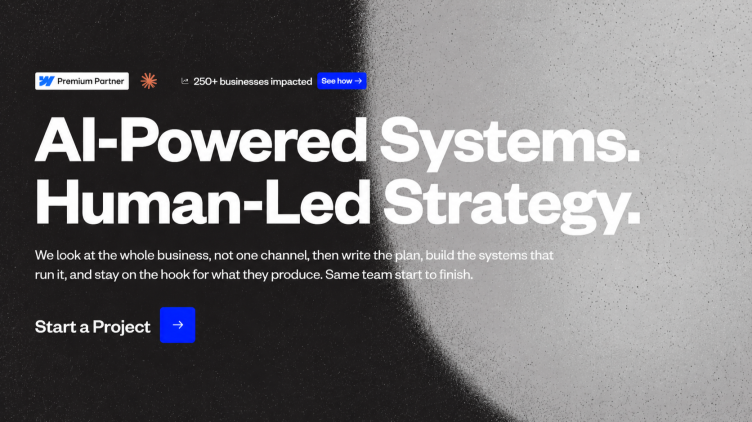
Transform your website, pitch decks, sales collateral and more, all with transparent, upfront, pricing.